- Introduction & Background
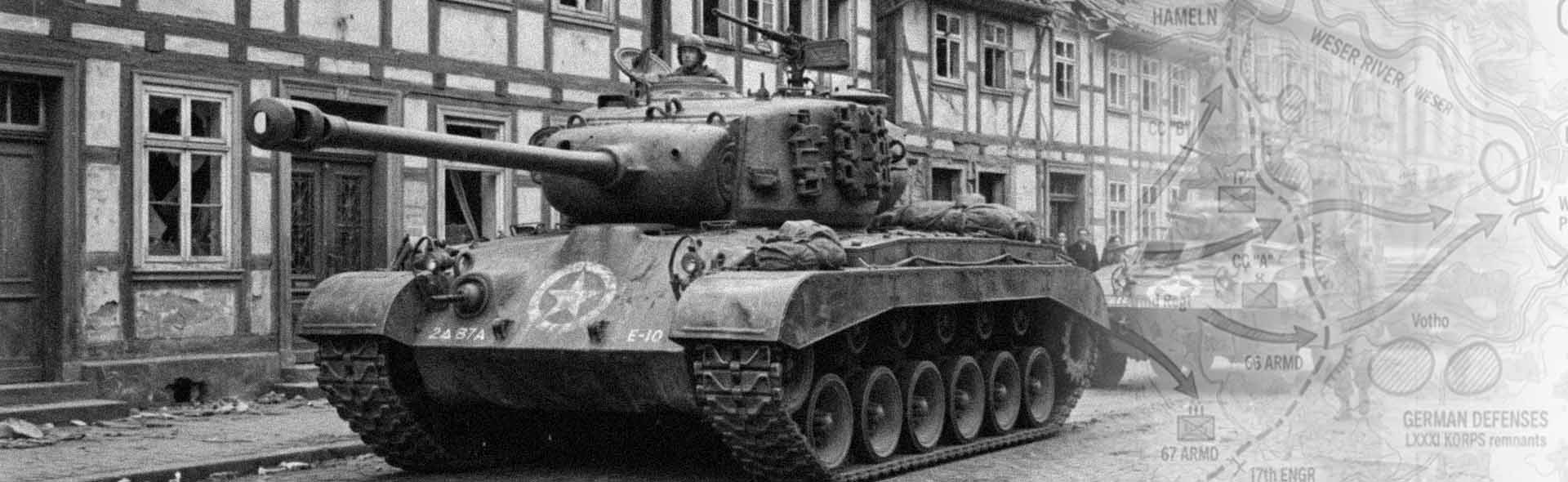
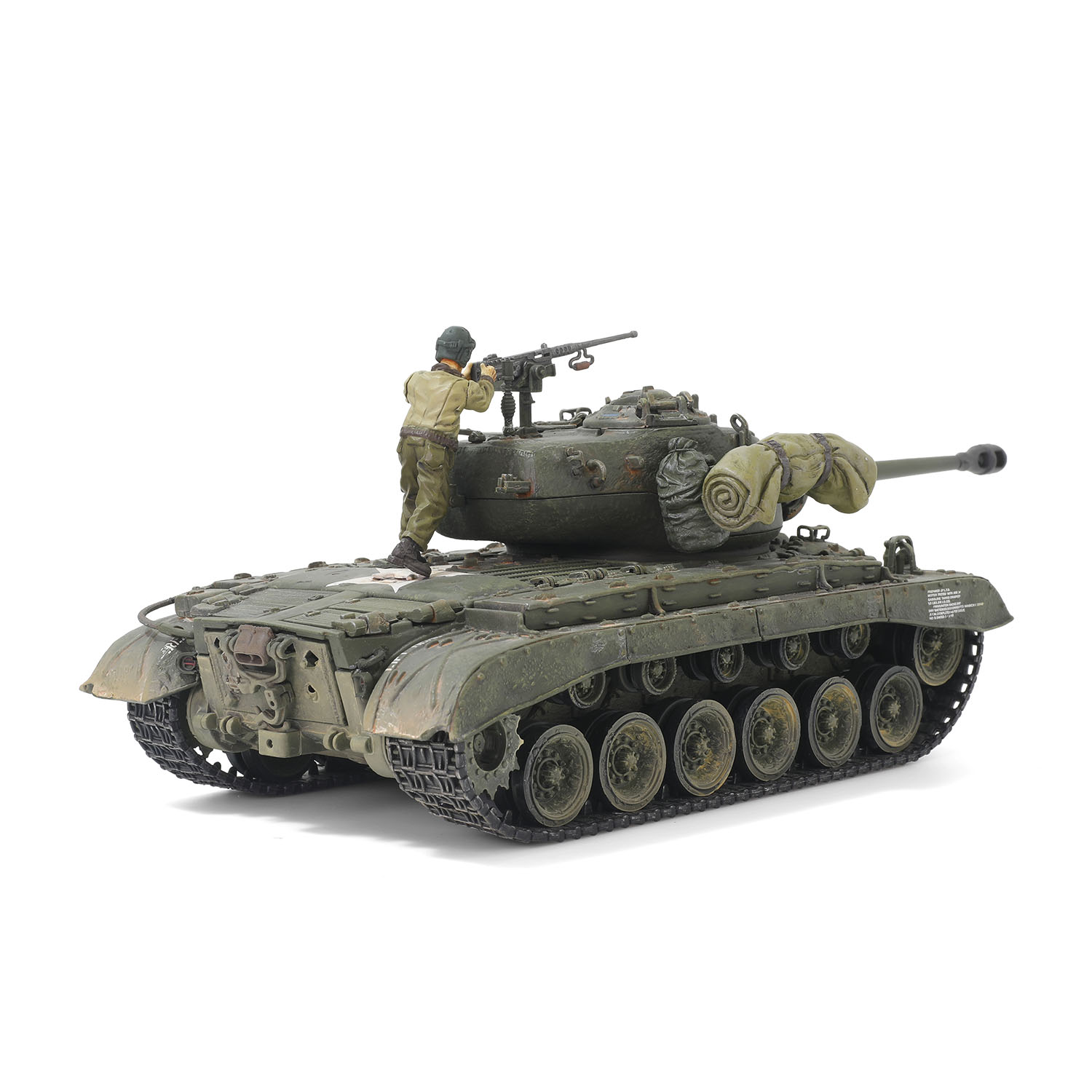
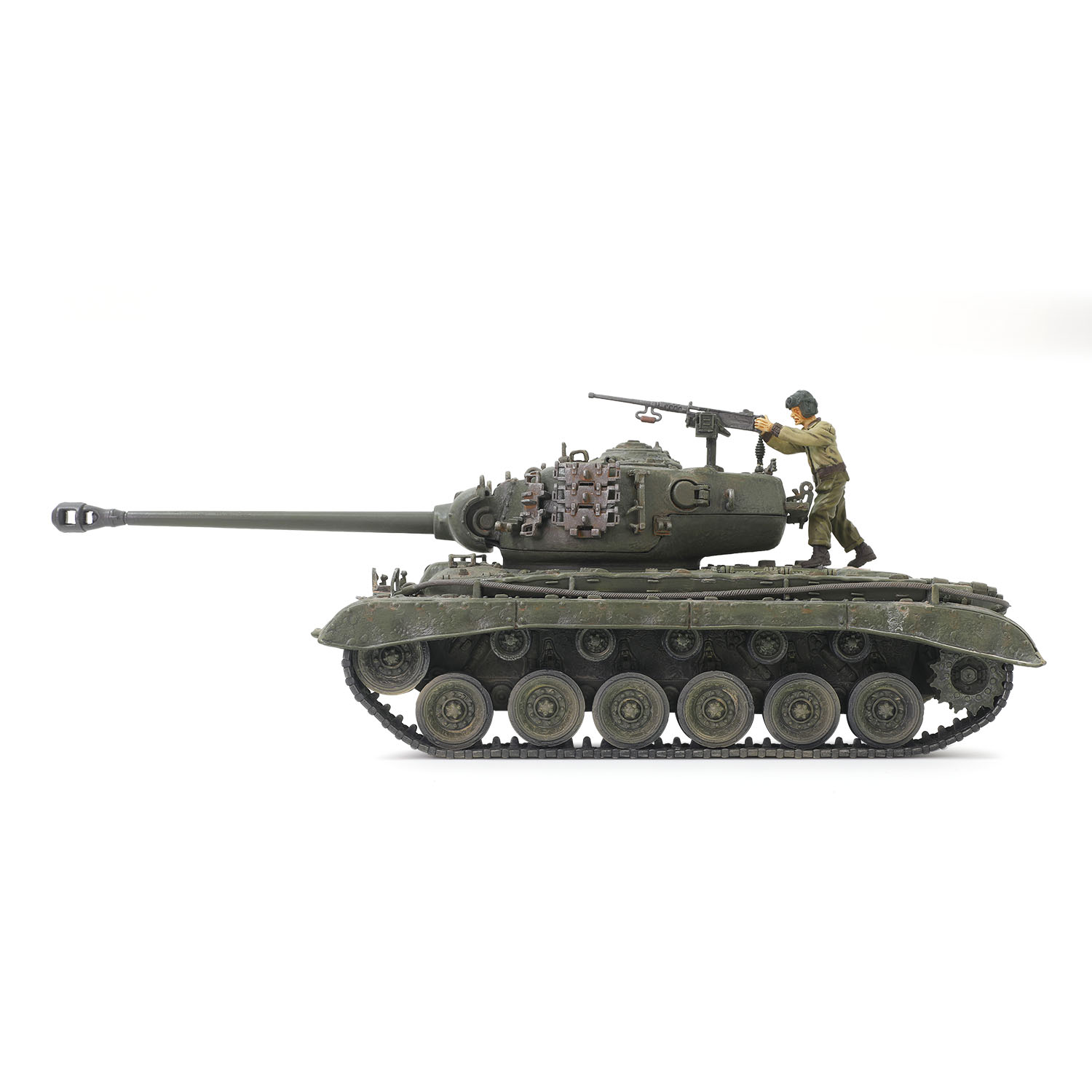
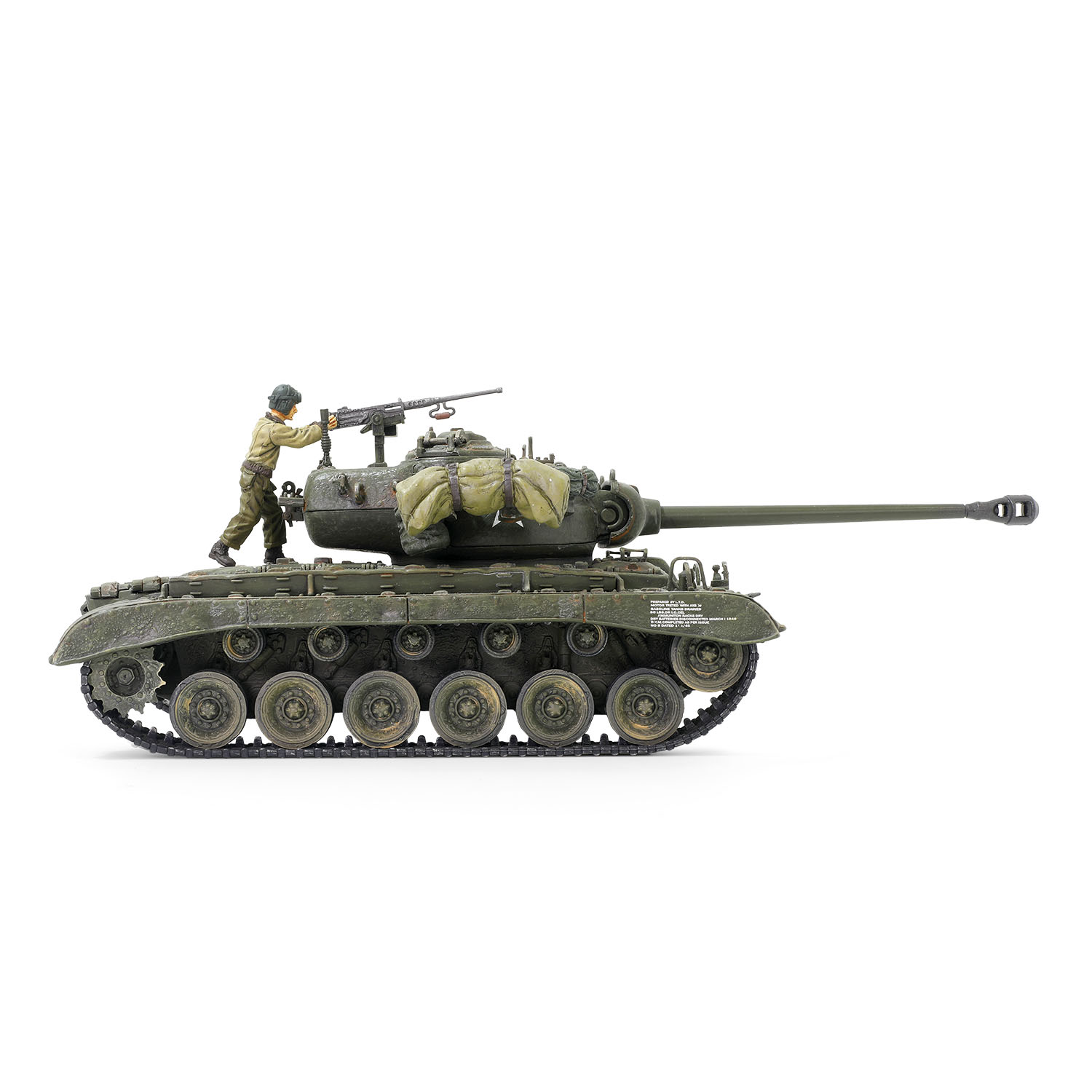
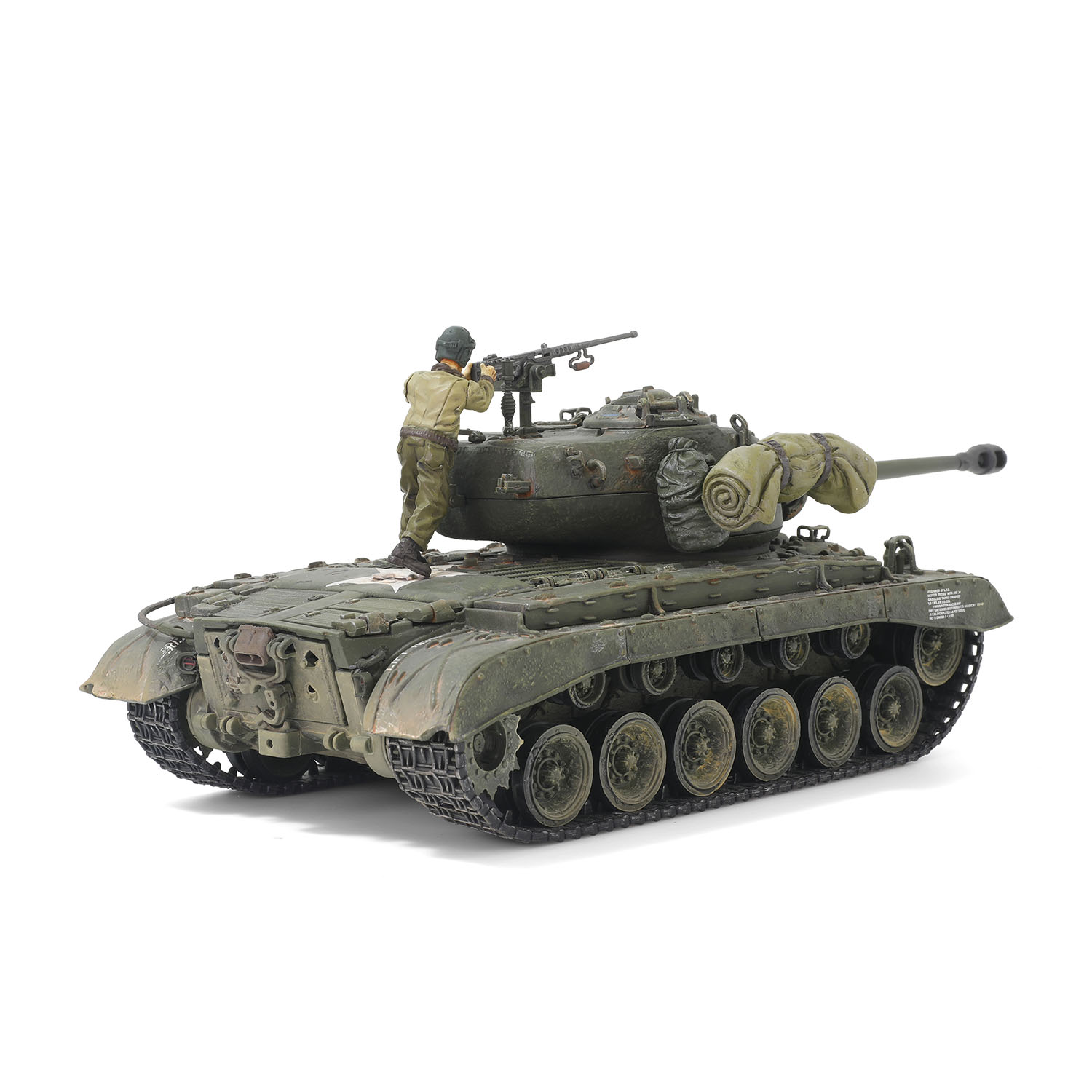
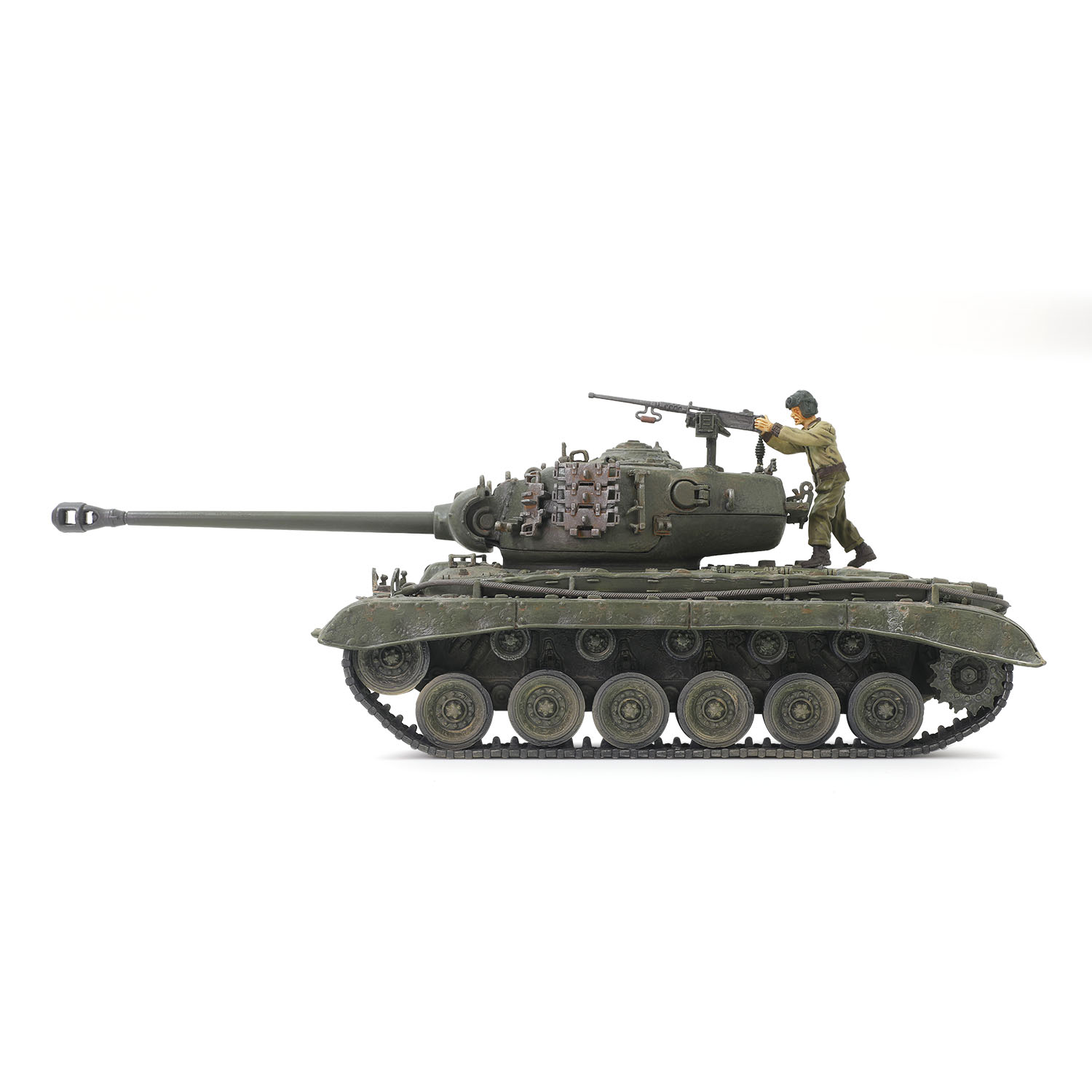
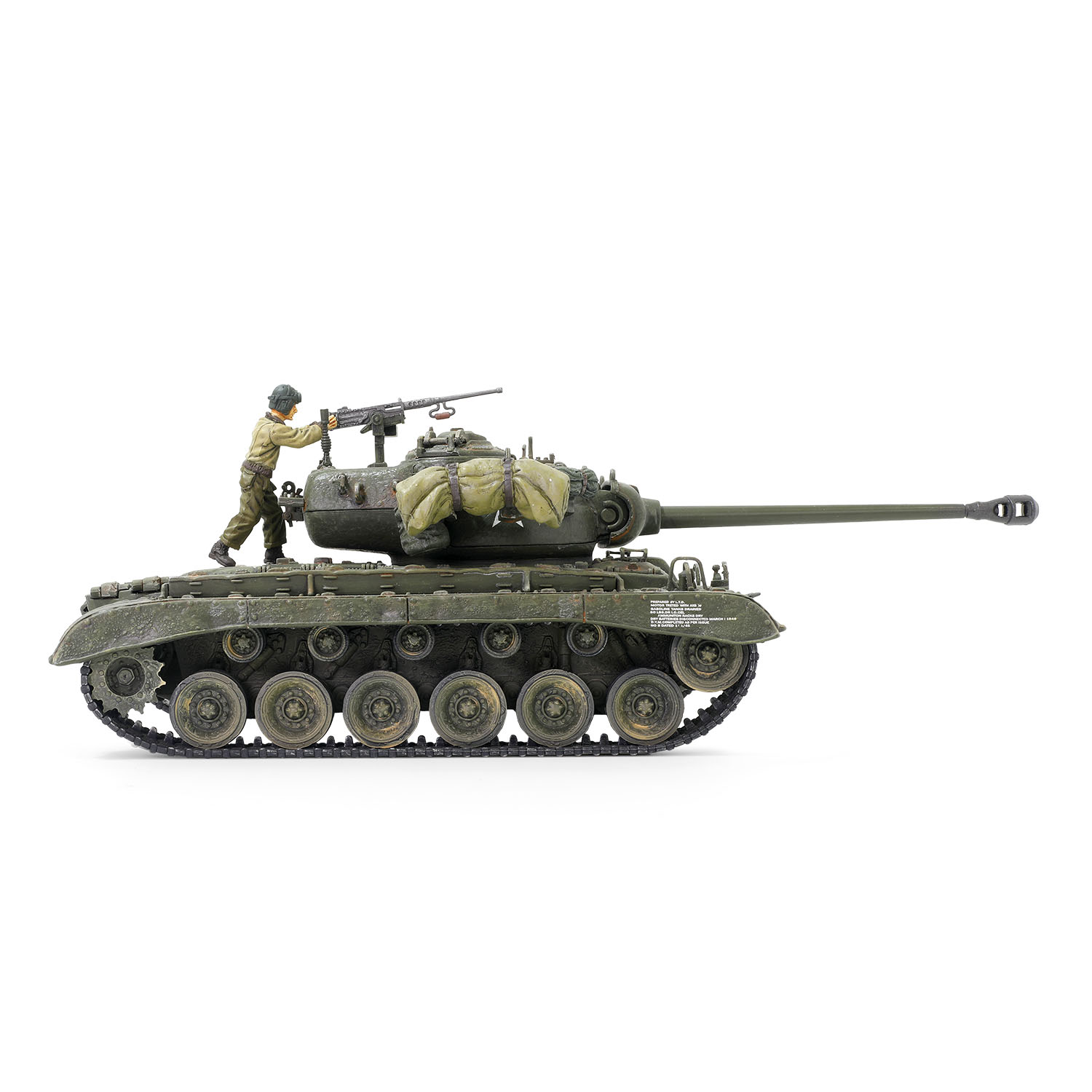
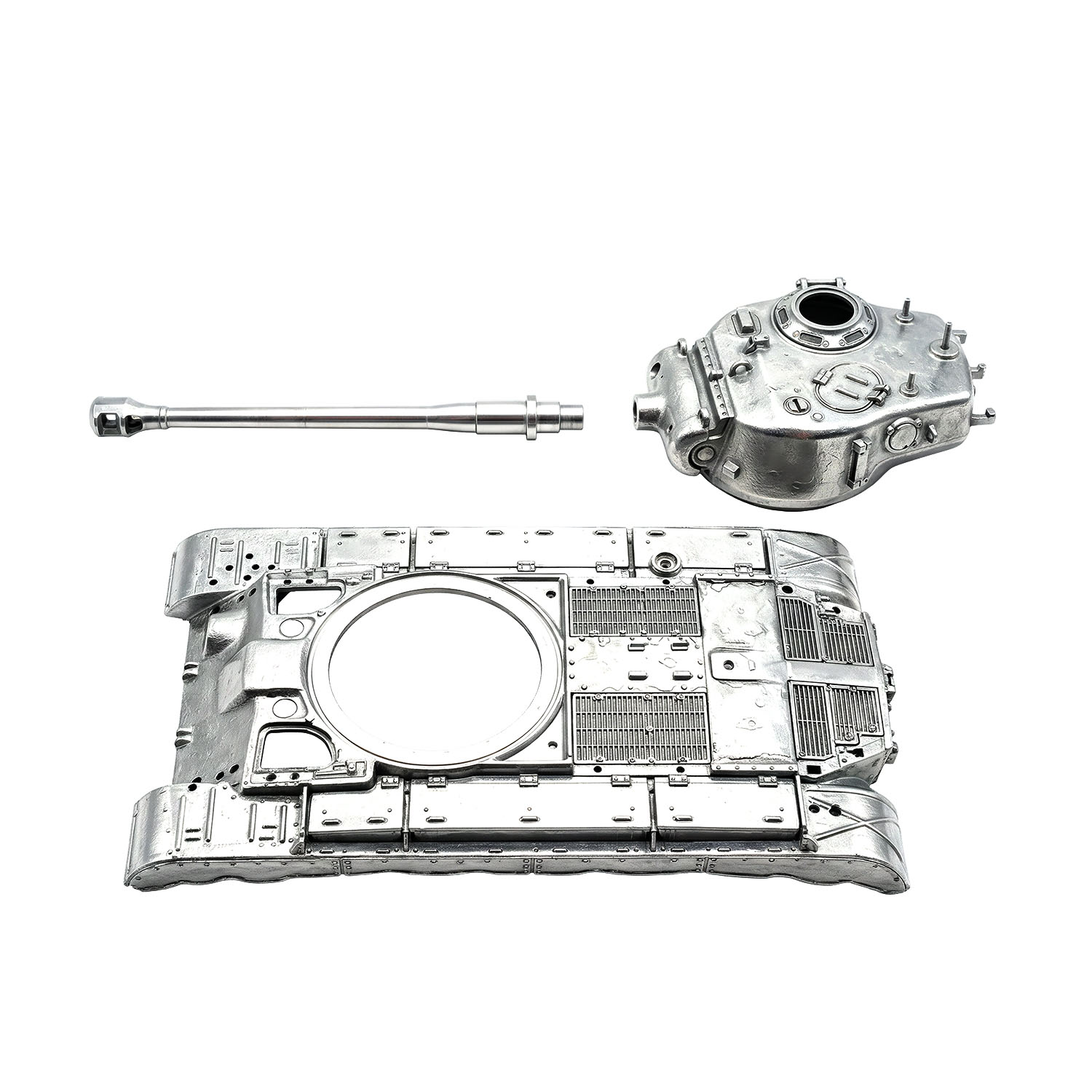
In the final stages of World War II, to overcome the firepower and armor disadvantages faced by the standard M4 Sherman against German Tiger and Panther tanks, the U.S. Army developed the M26 Pershing heavy tank, named after WWI General John J. Pershing. Weighing 41.7 tonnes in combat trim, the M26 featured heavily sloped front hull and gun mantlet armor up to 102 mm (4 in) thick, effectively deflecting standard German anti-tank fire. Its primary armament—a high-velocity 90 mm M3 gun adapted from an anti-aircraft cannon (with 70 rounds), paired with one .50 cal M2 heavy machine gun and two .30 cal machine guns—could penetrate a Tiger I's frontal armor using HVAP ammunition, ending the need for risky flanking maneuvers. While its 500 hp Ford GAF V8 engine limited its top road speed to 40 km/h (25 mph) and made hill climbing sluggish, the advanced torsion bar suspension ensured superior firing stability.
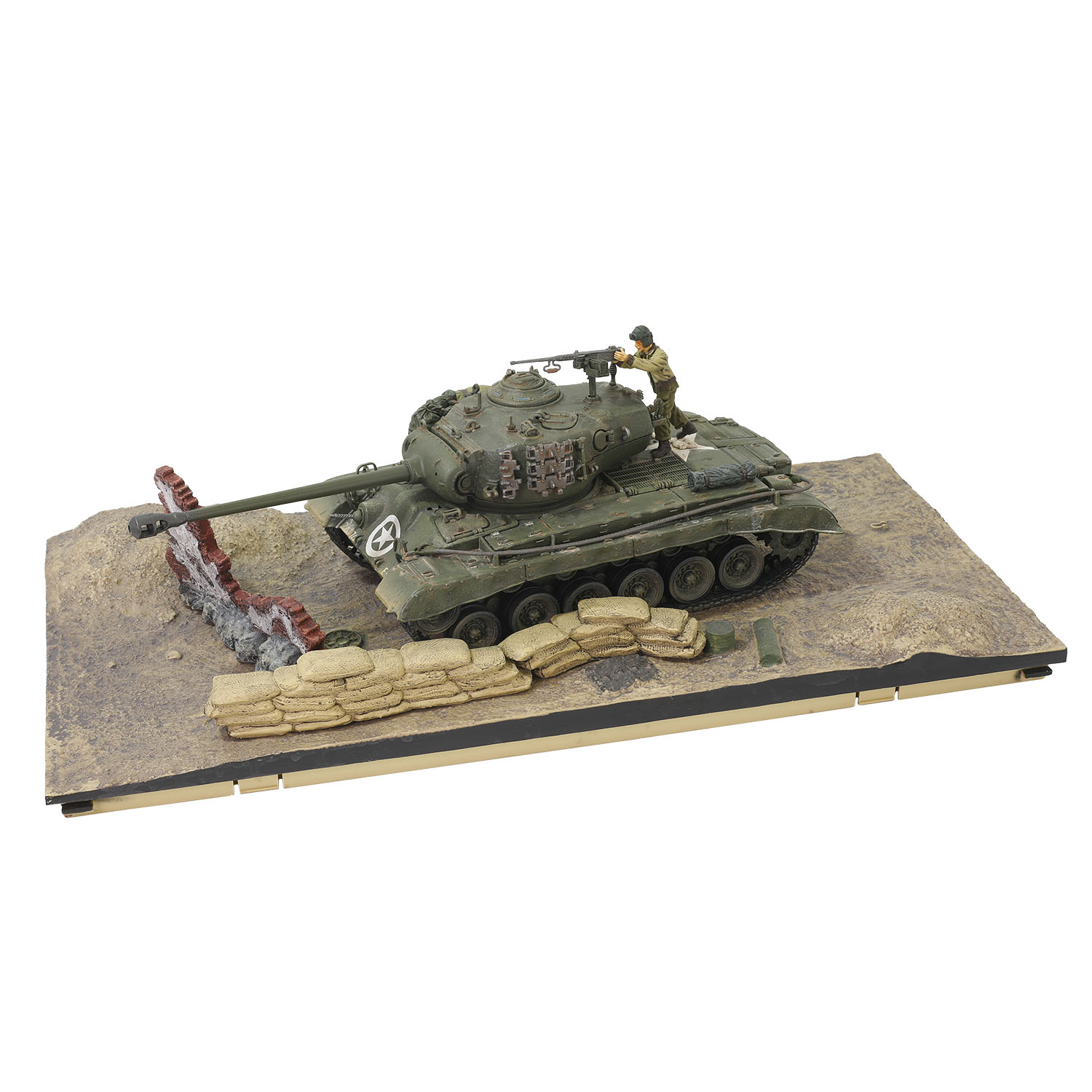
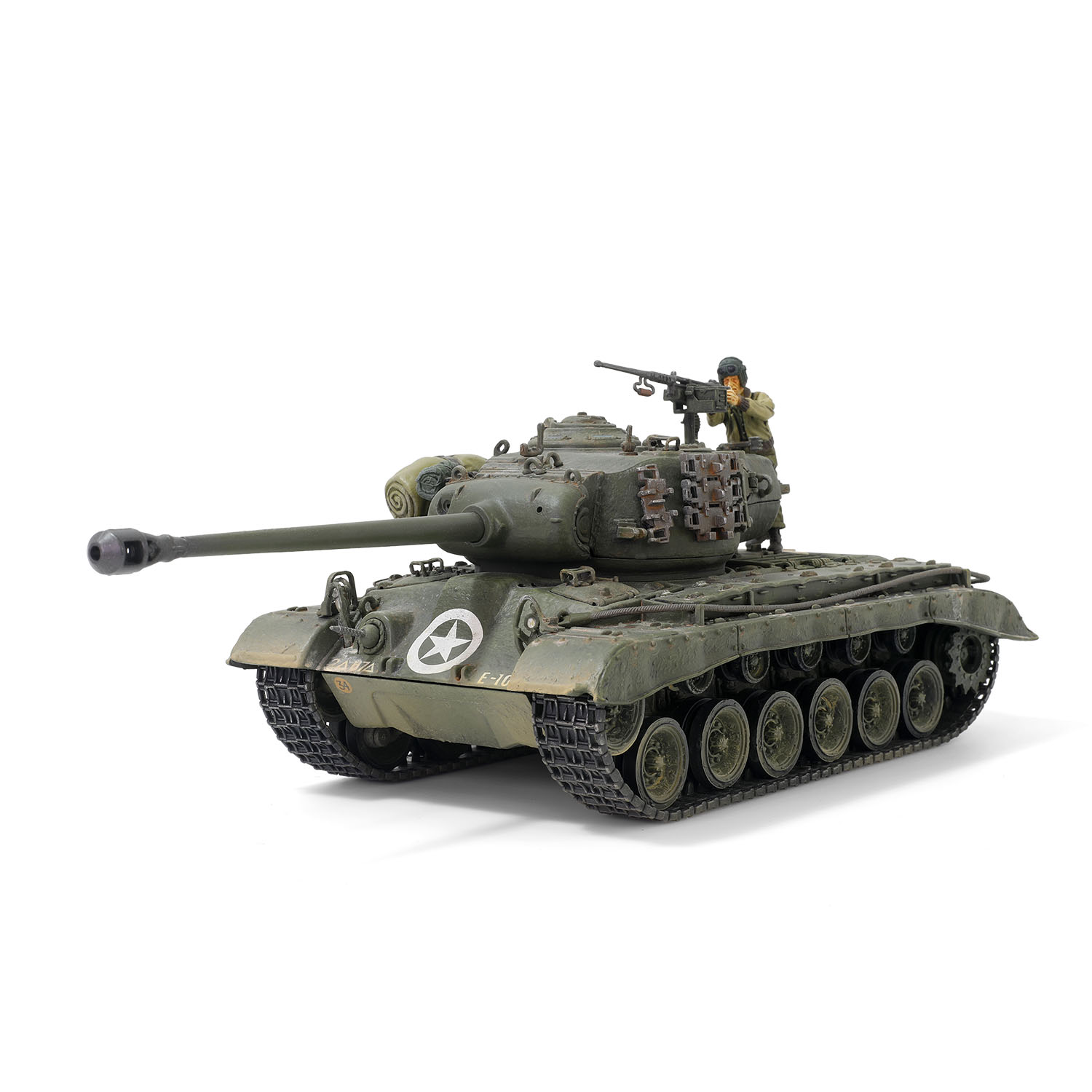
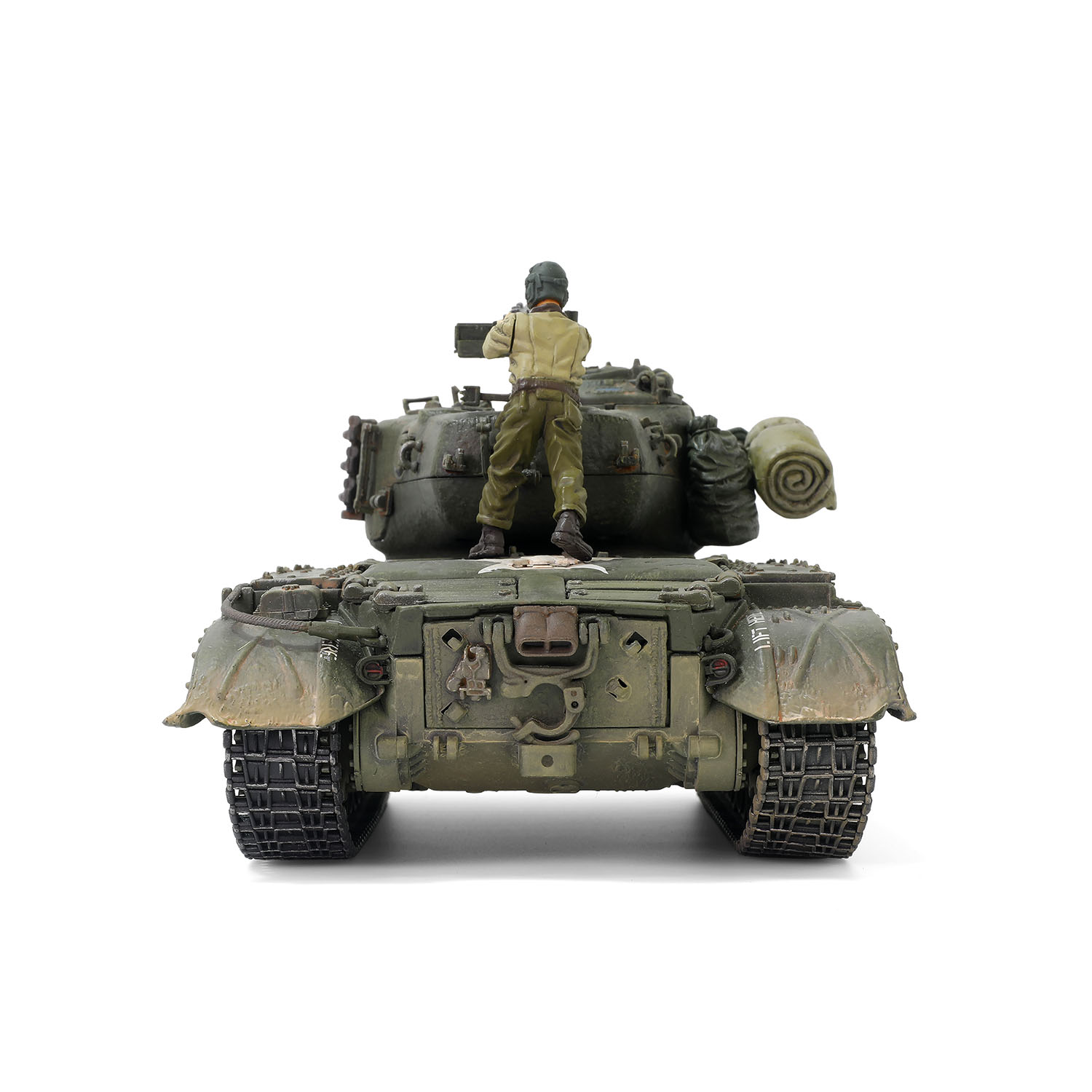
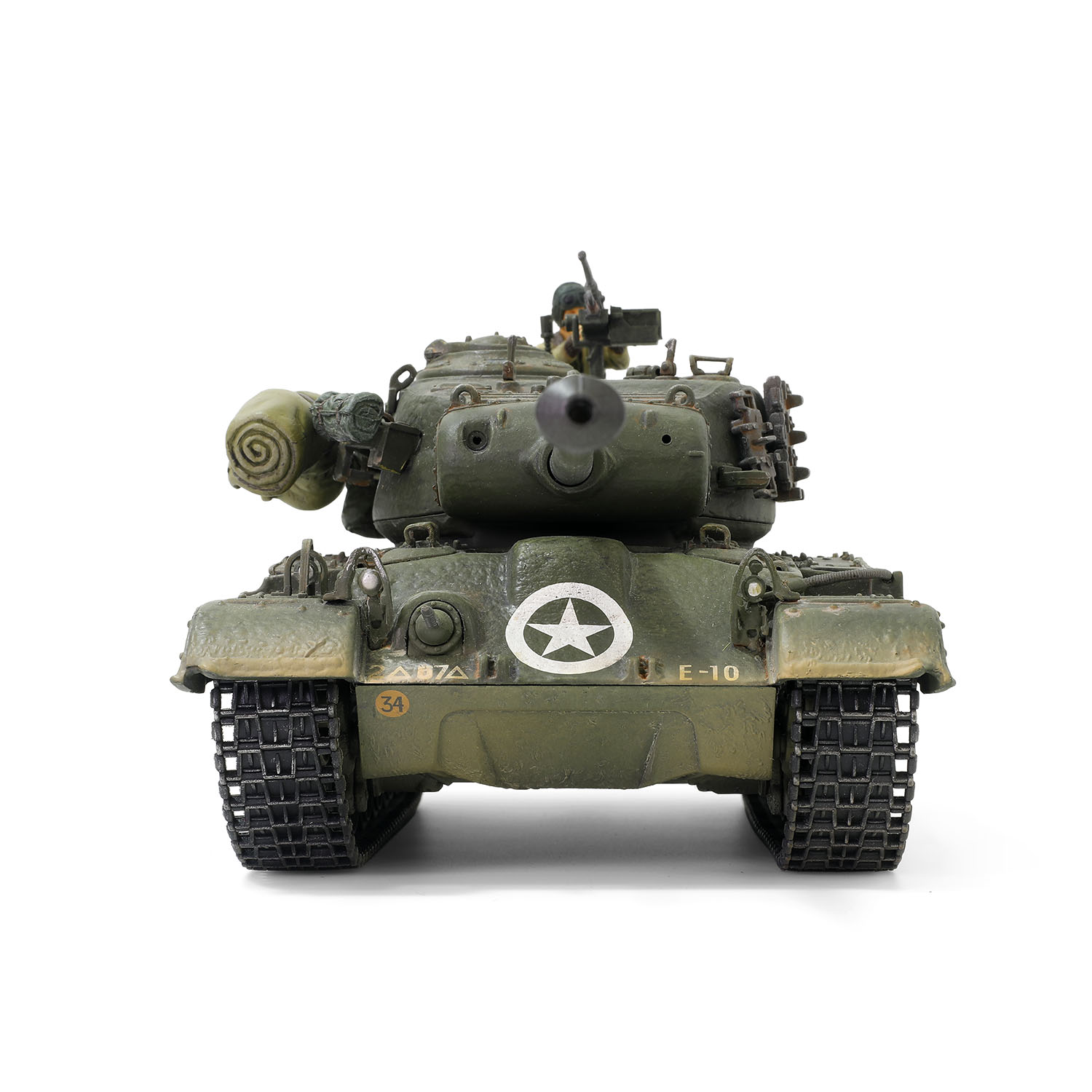
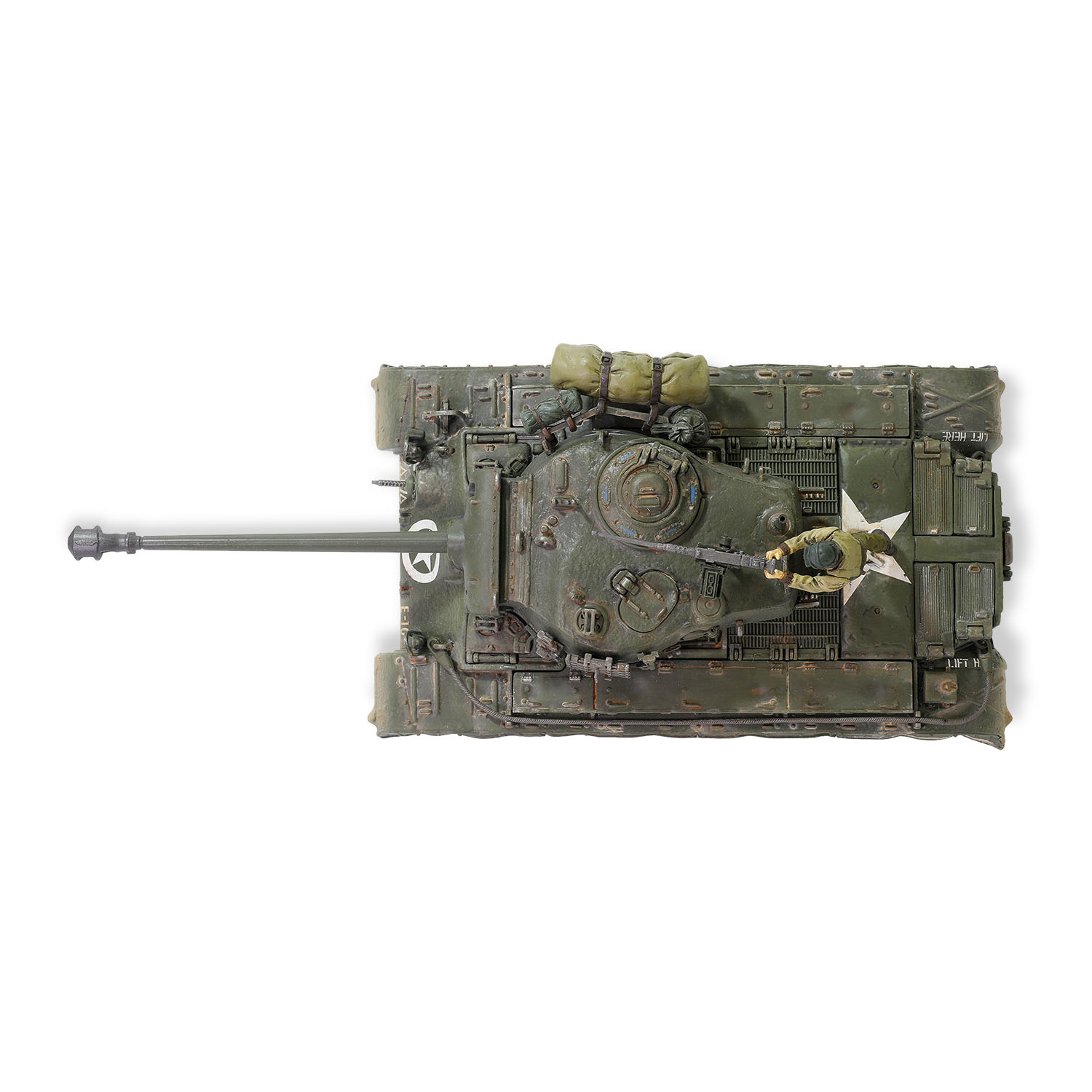
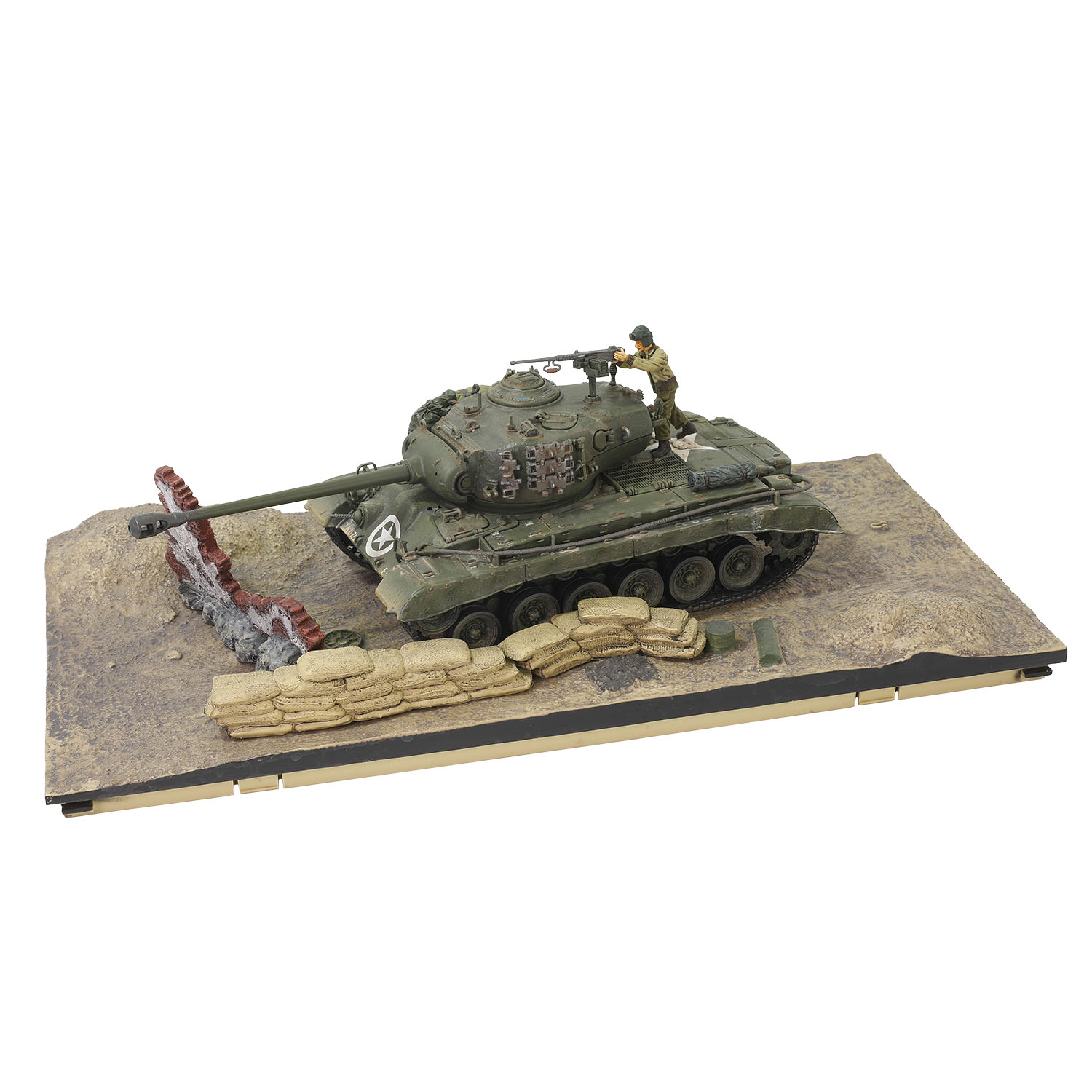
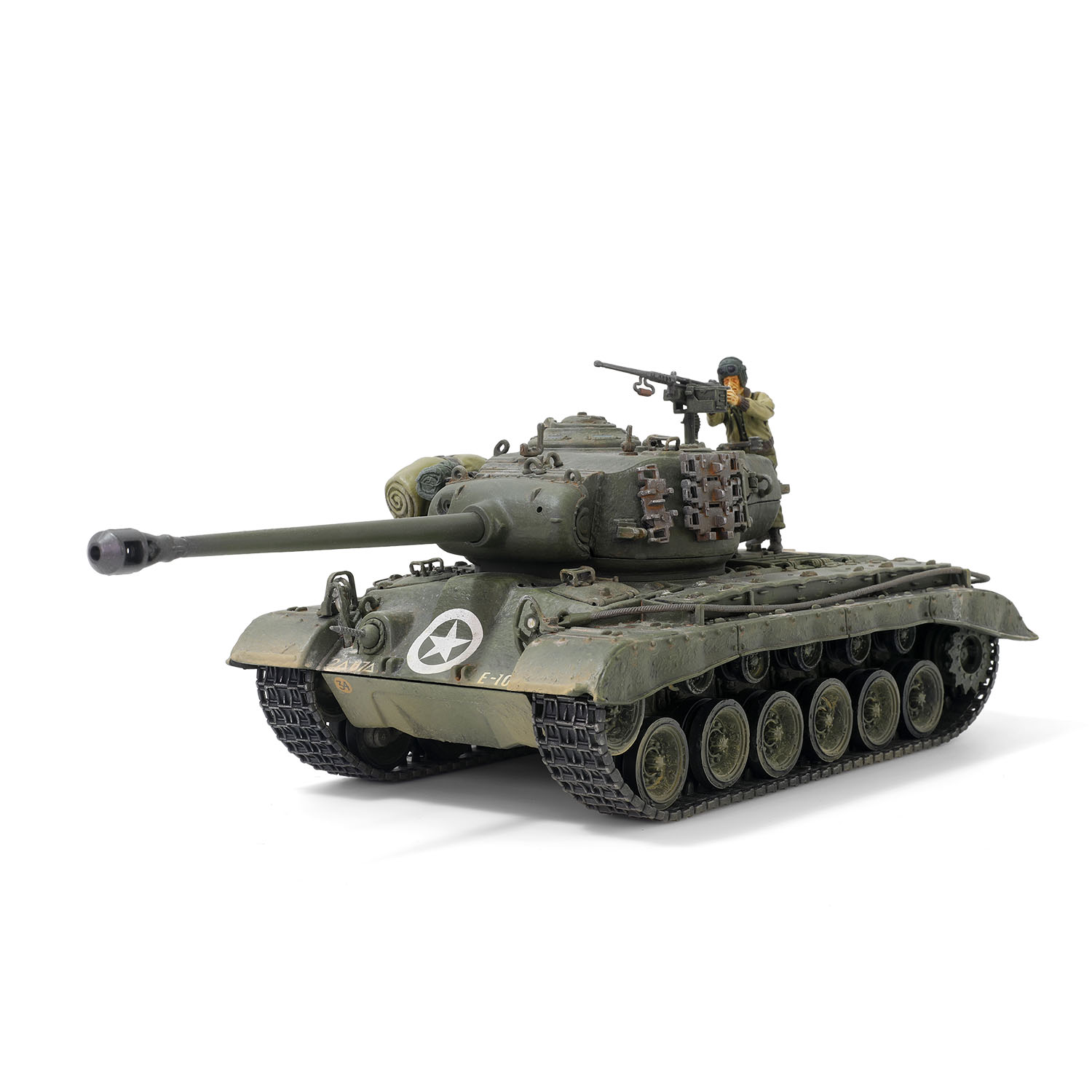
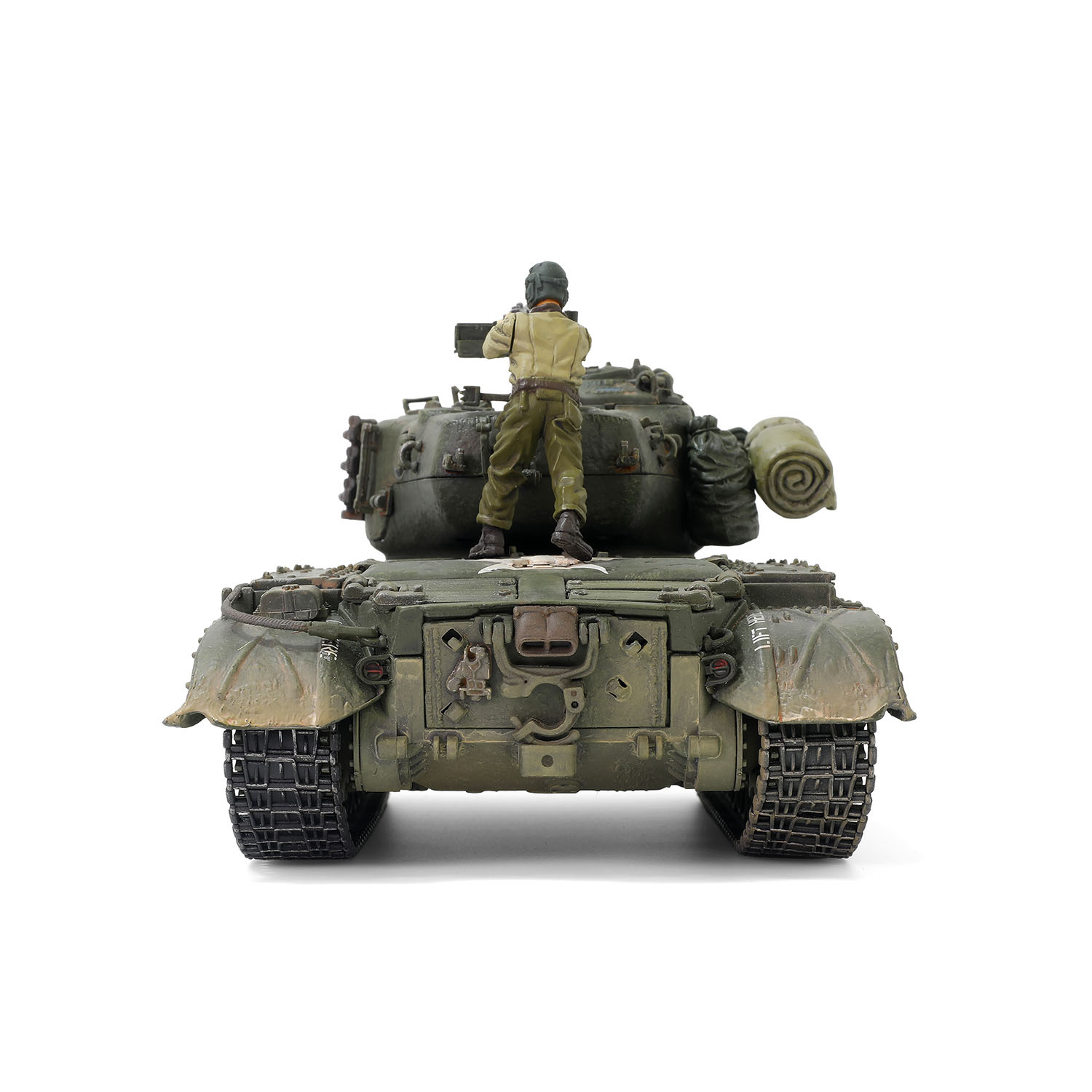
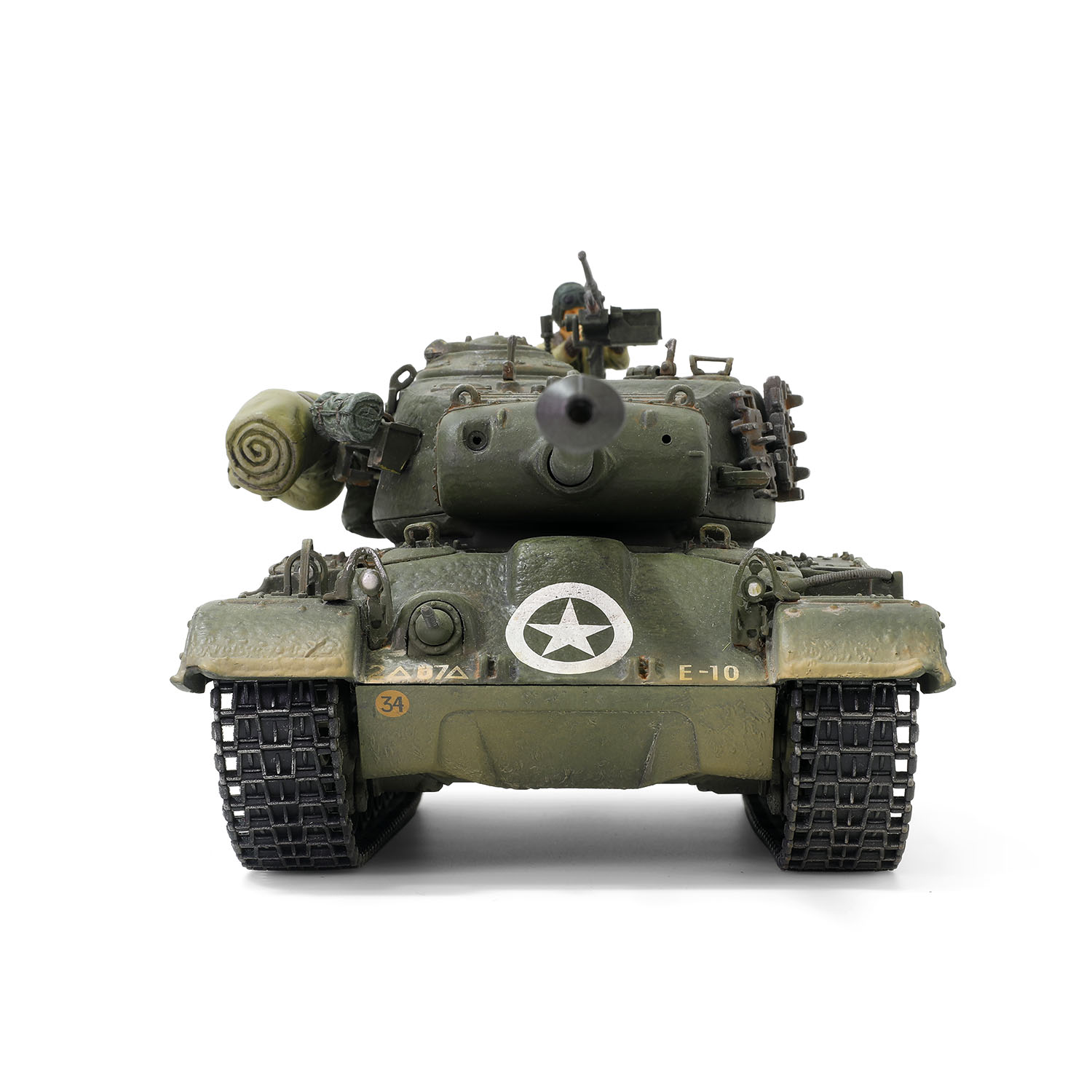
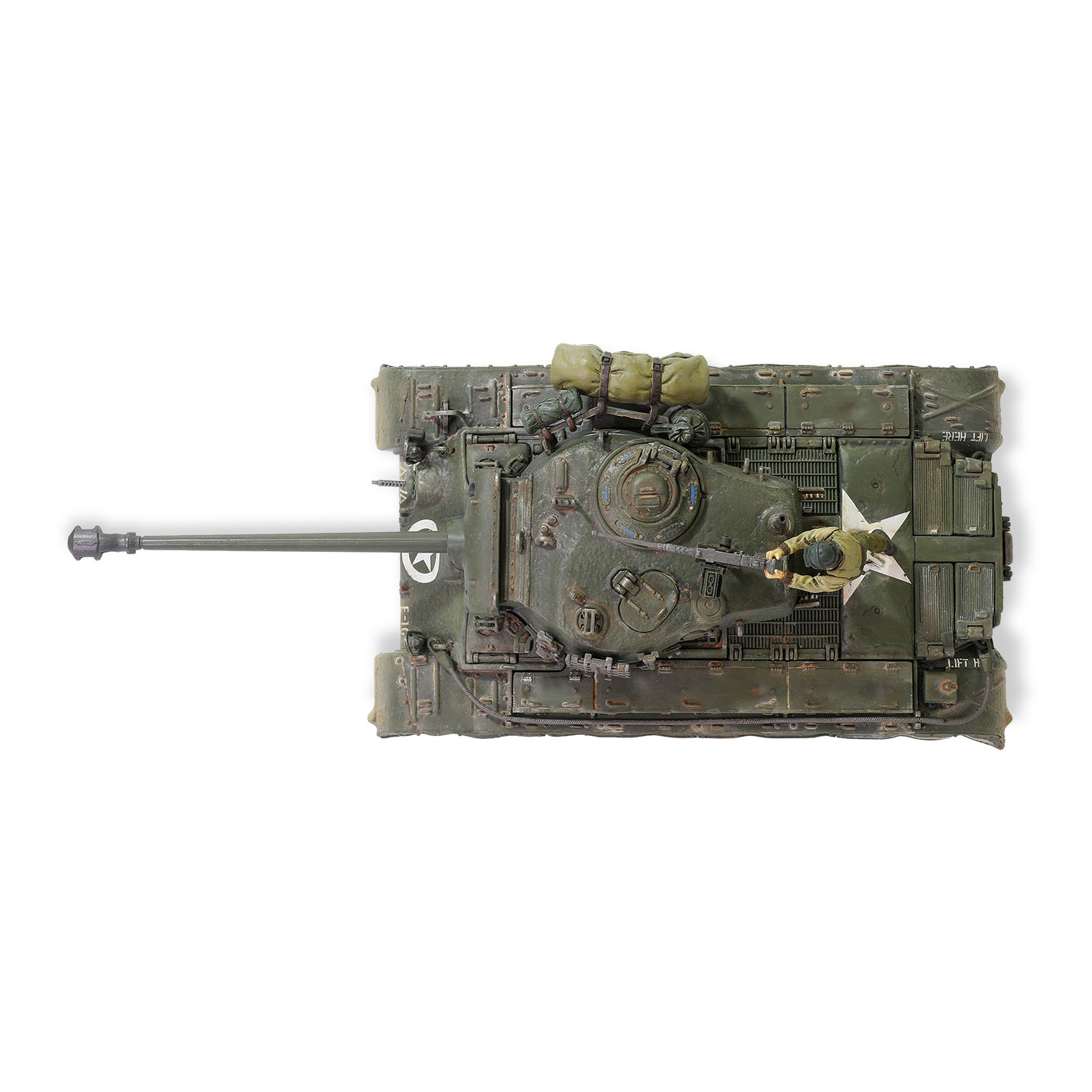
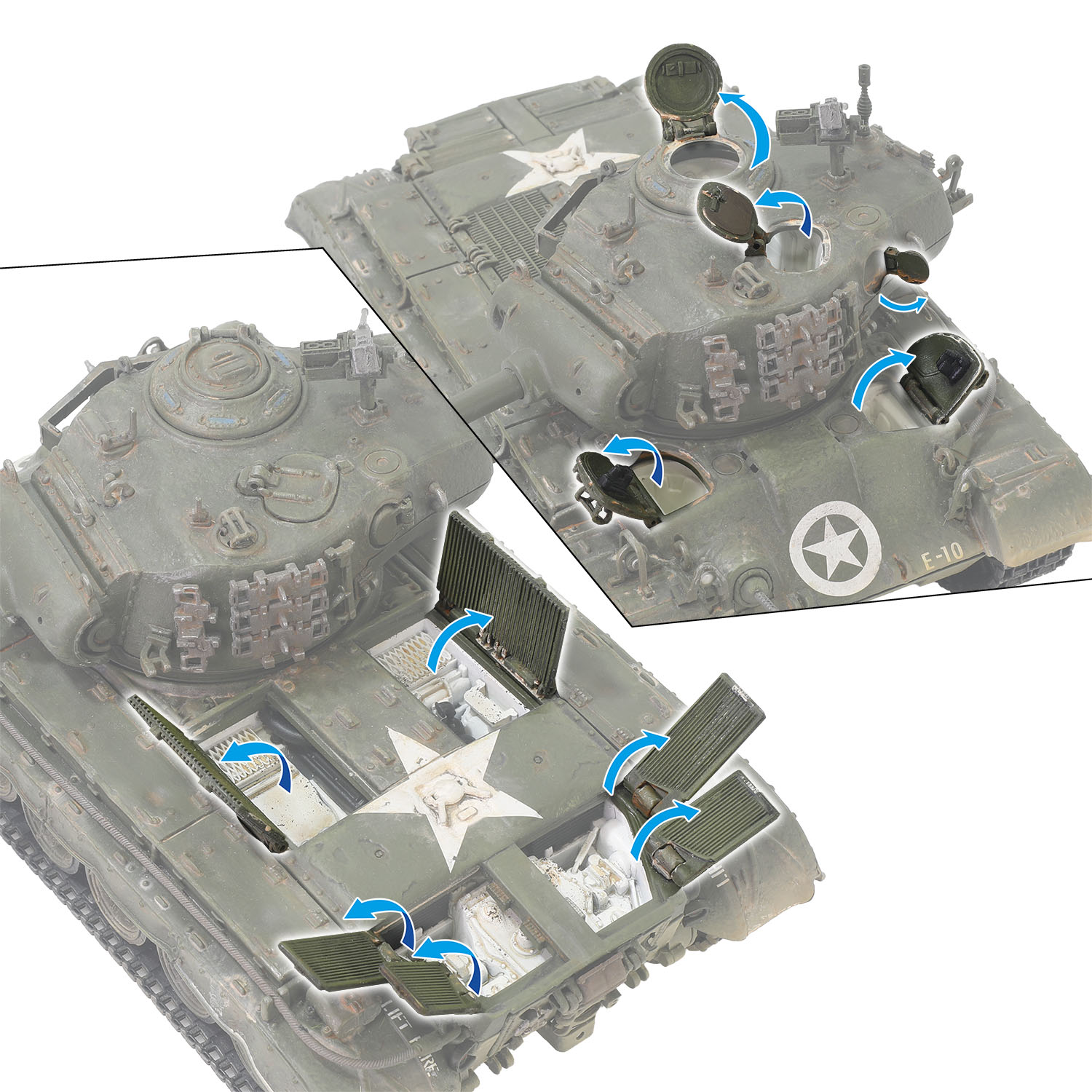
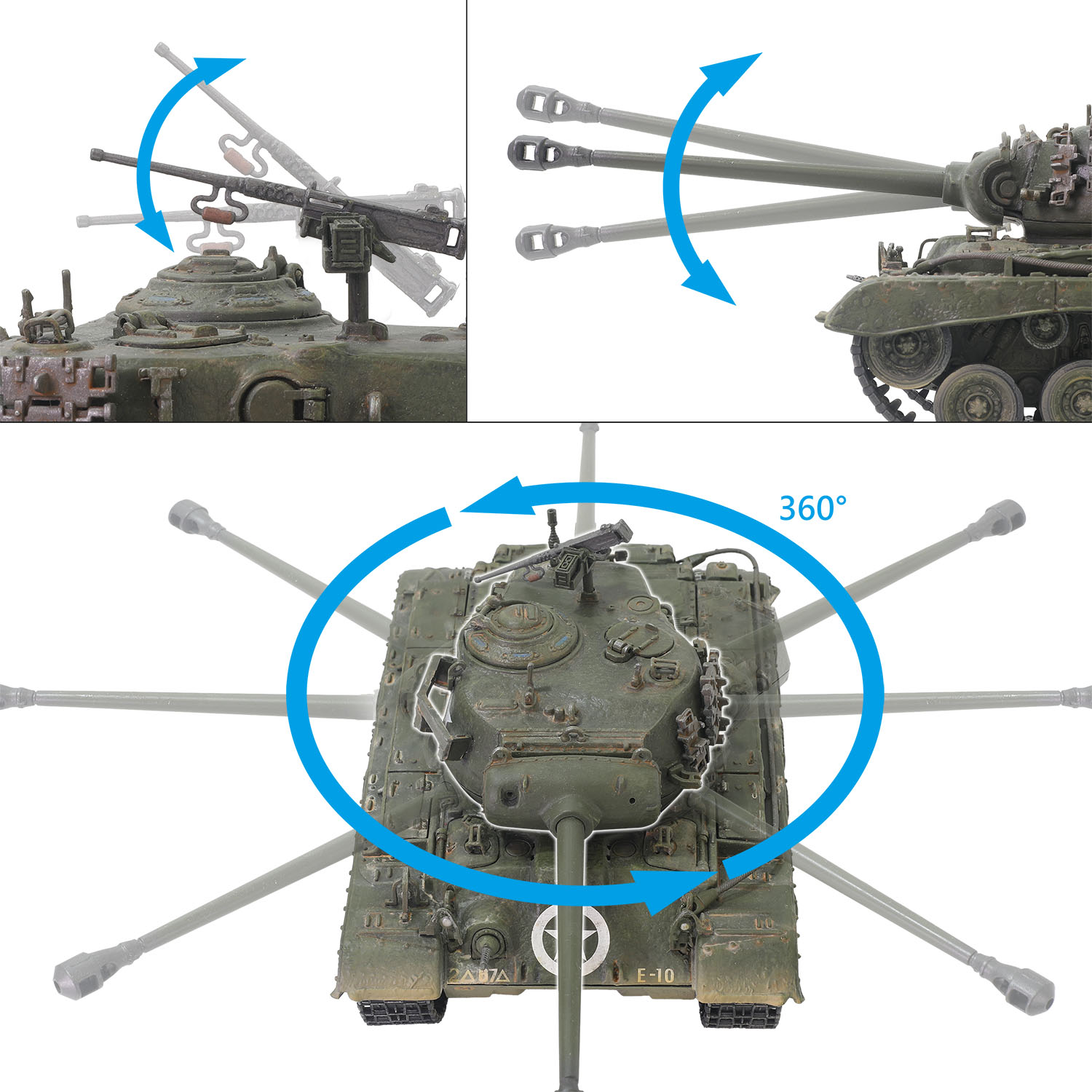
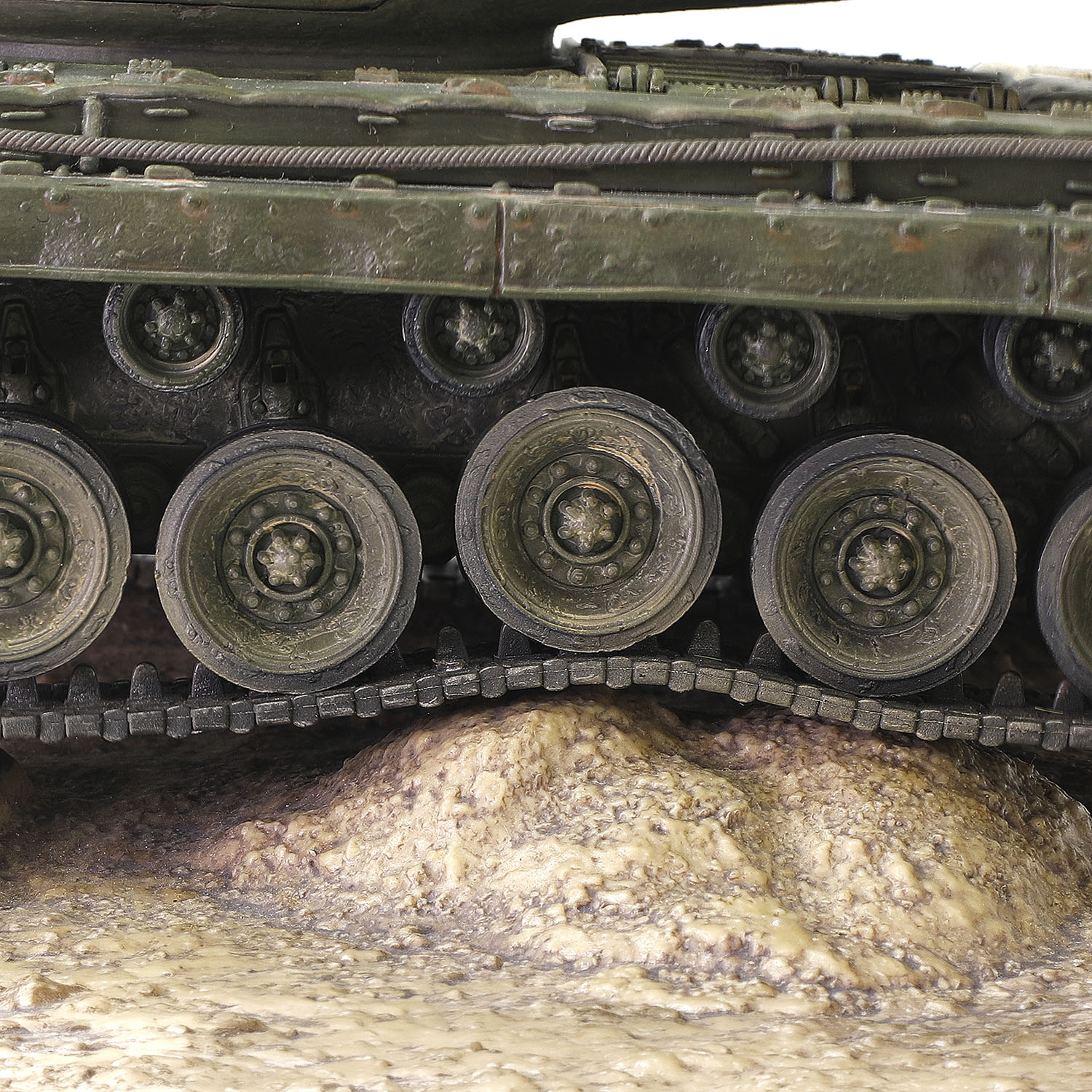
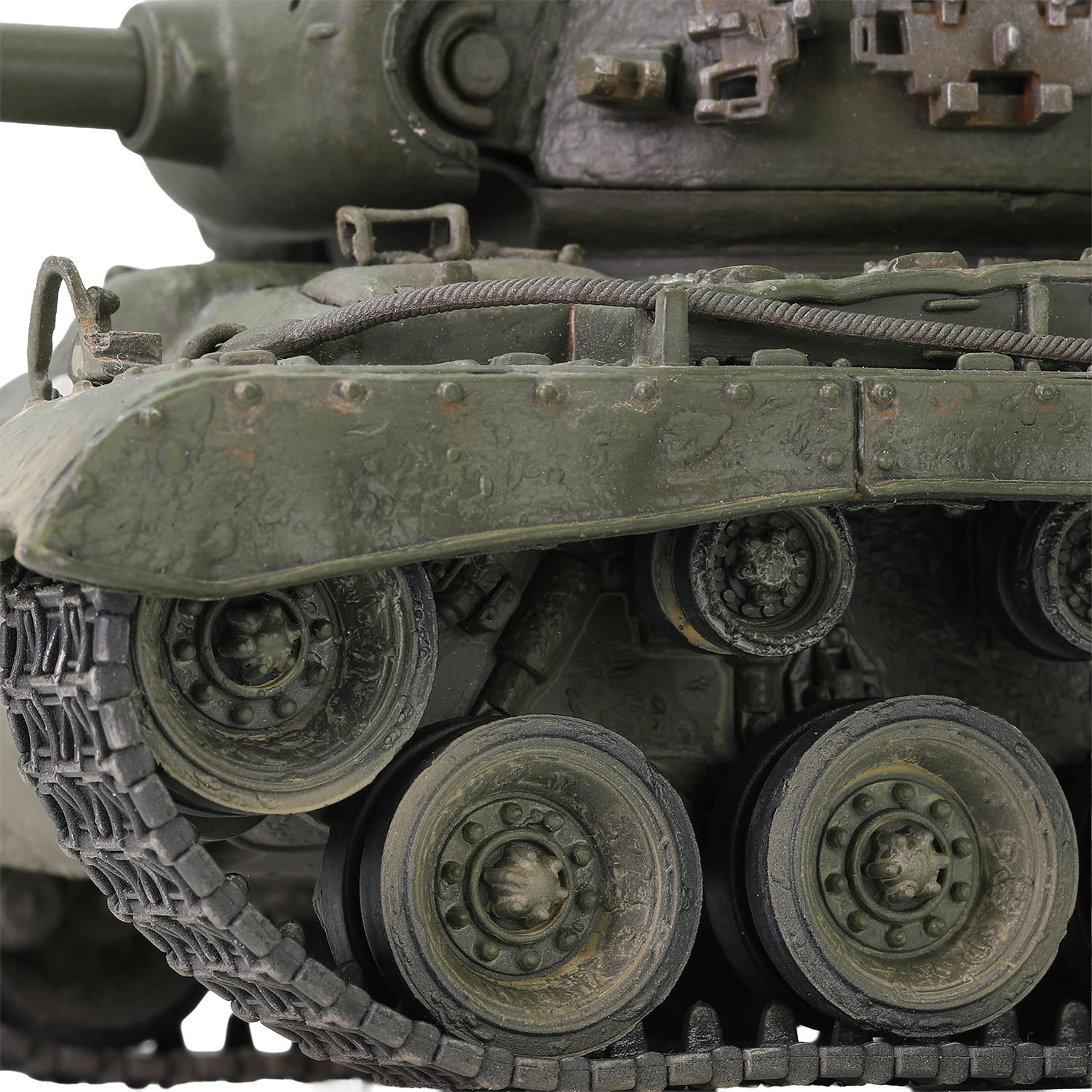
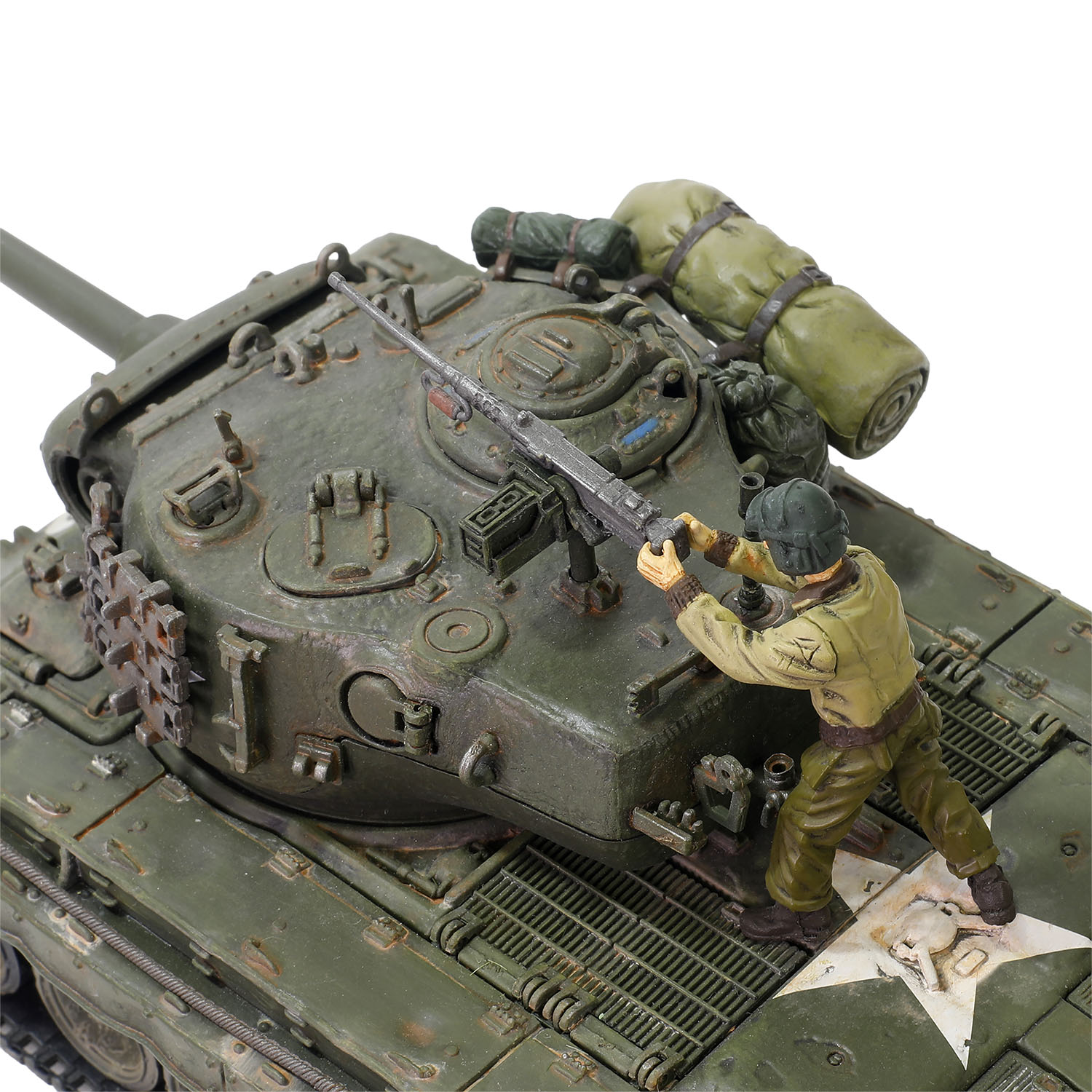
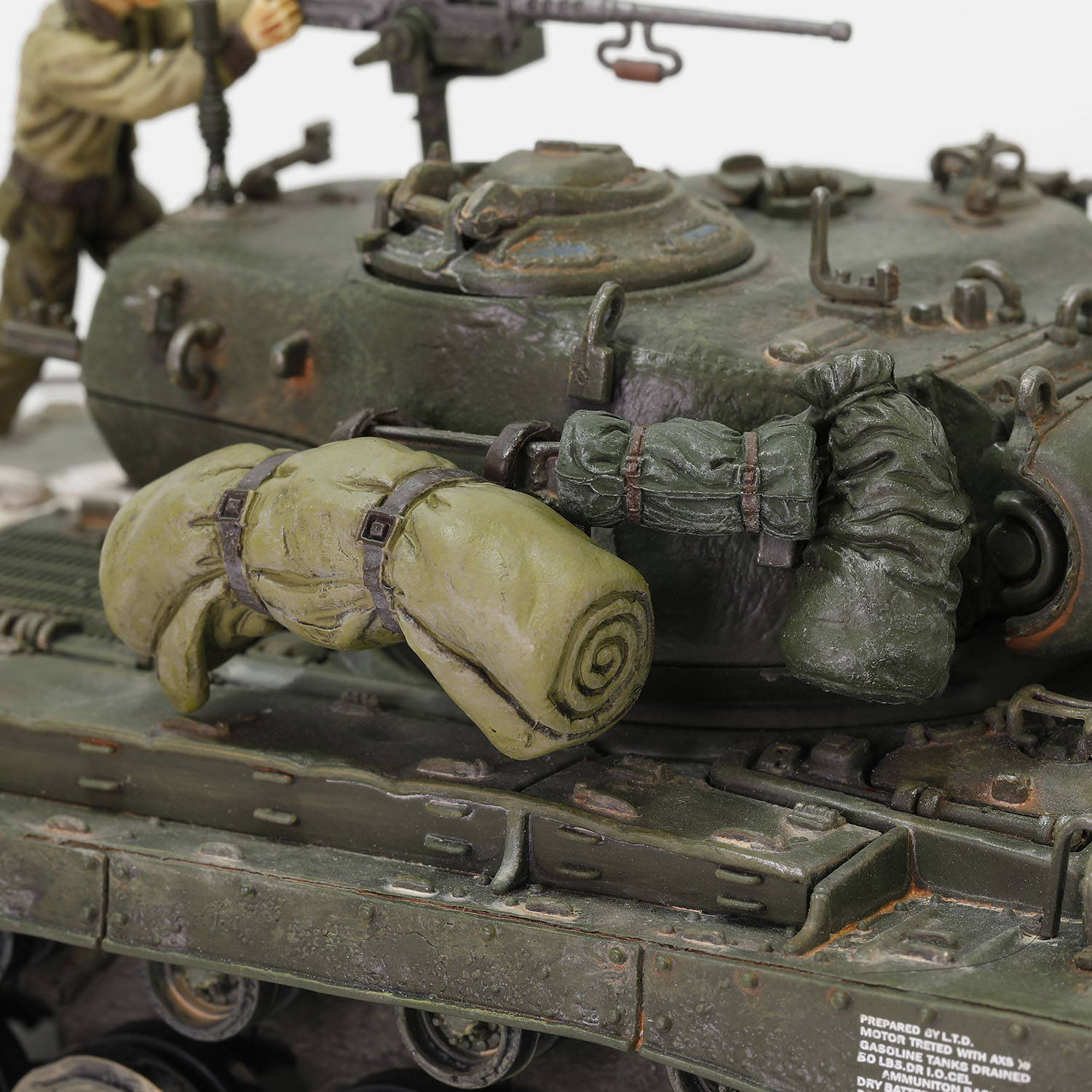
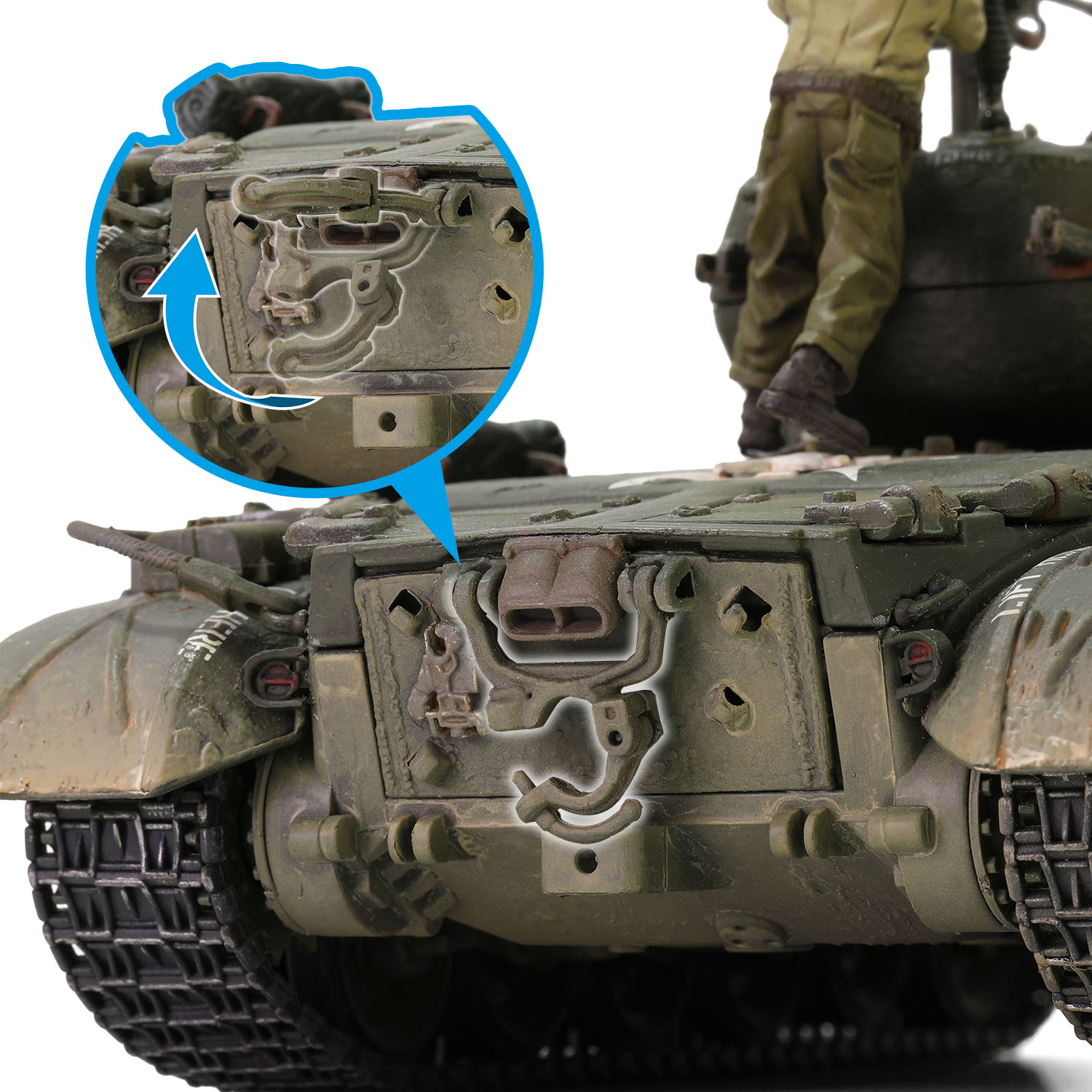
Deployed to Europe in early 1945, the Pershing shattered German armored dominance, famously destroying a Panther outside Cologne Cathedral and spearheading the Rhine crossing at Remagen (later proving equally dominant against Soviet T-34/85 tanks in the Korean War). This model accurately replicates Tank #10 of E Company, 67th Armored Regiment, 2nd Armored Division ("Hell on Wheels") in the Rhine Sector, Germany, 1945. As the only U.S. heavy tank to see combat in WWII and the direct predecessor to the postwar Patton tank series, it holds exceptional historical and collectible value.