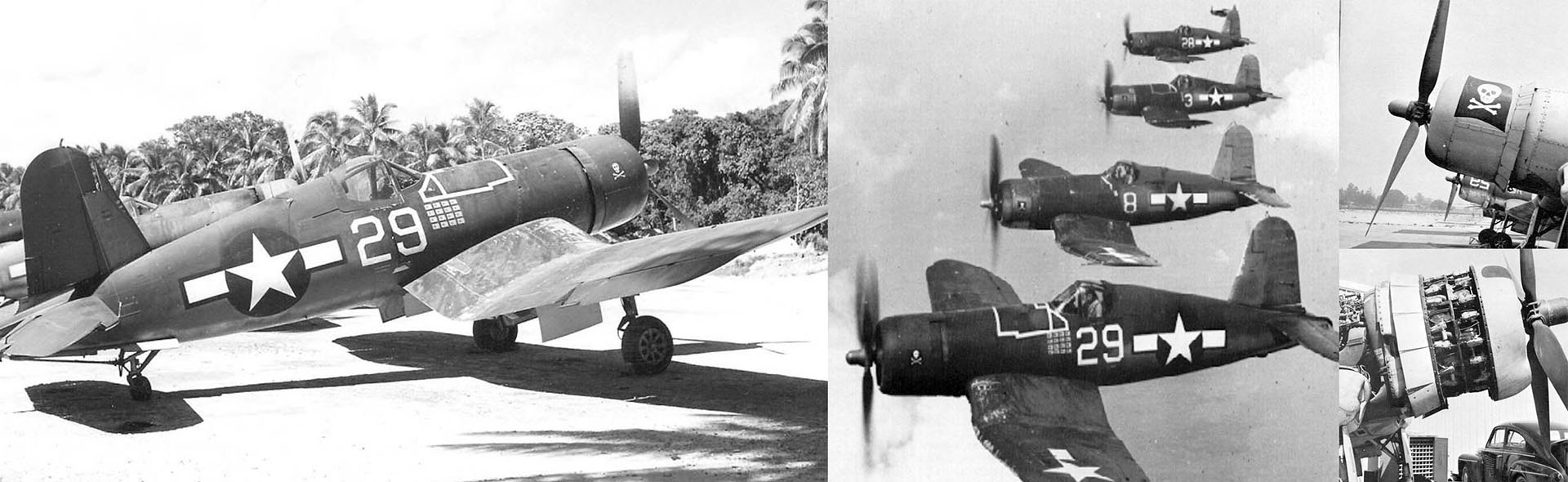
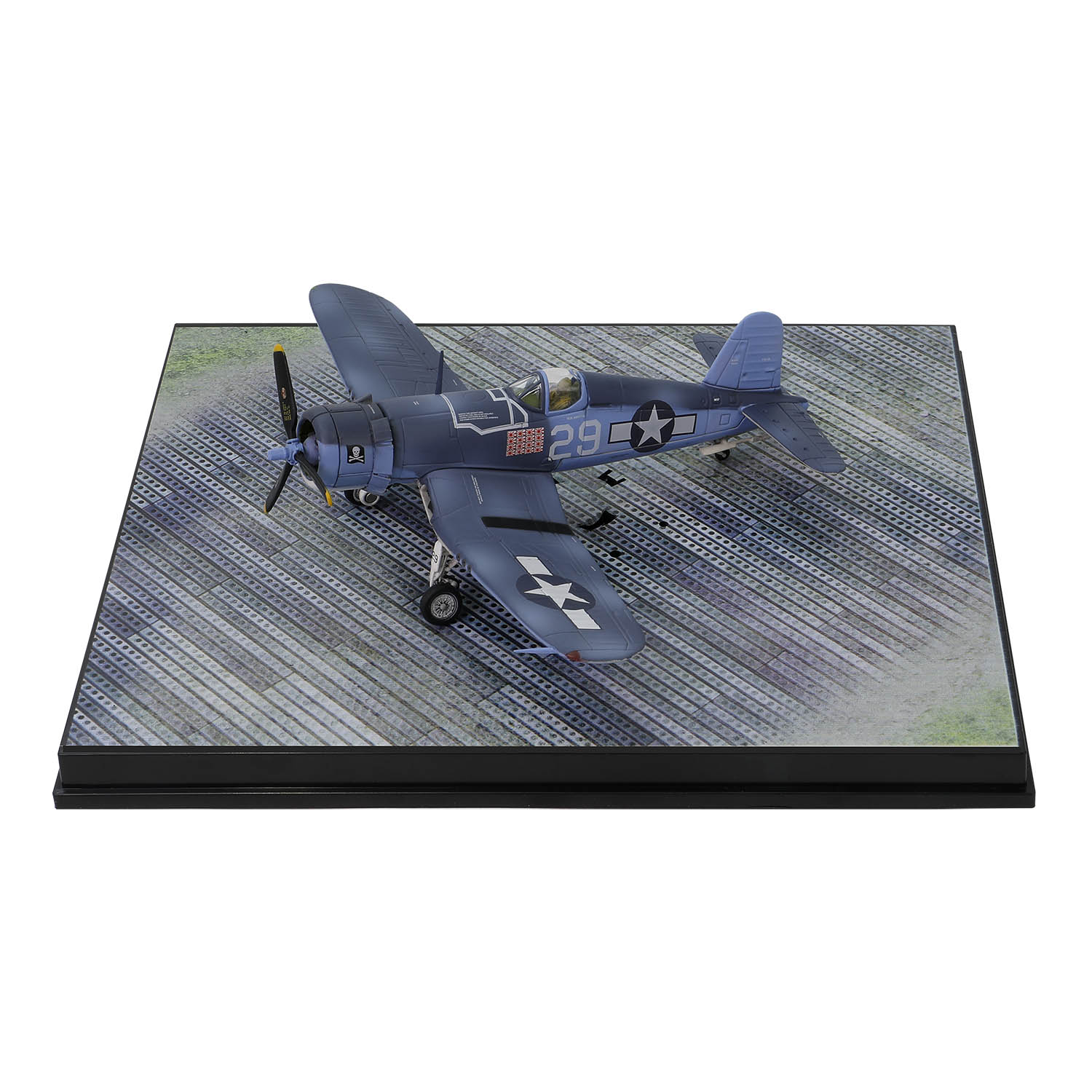
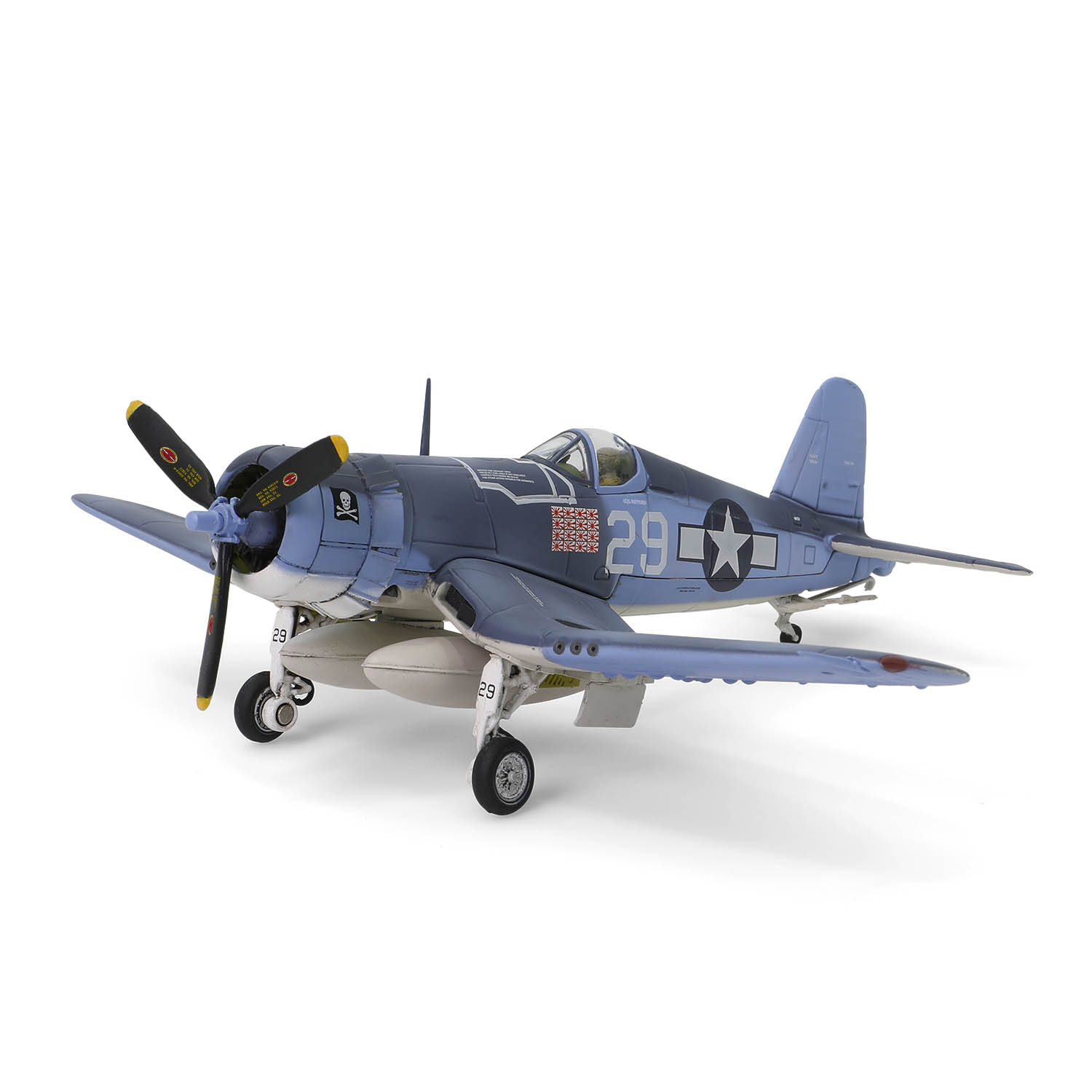
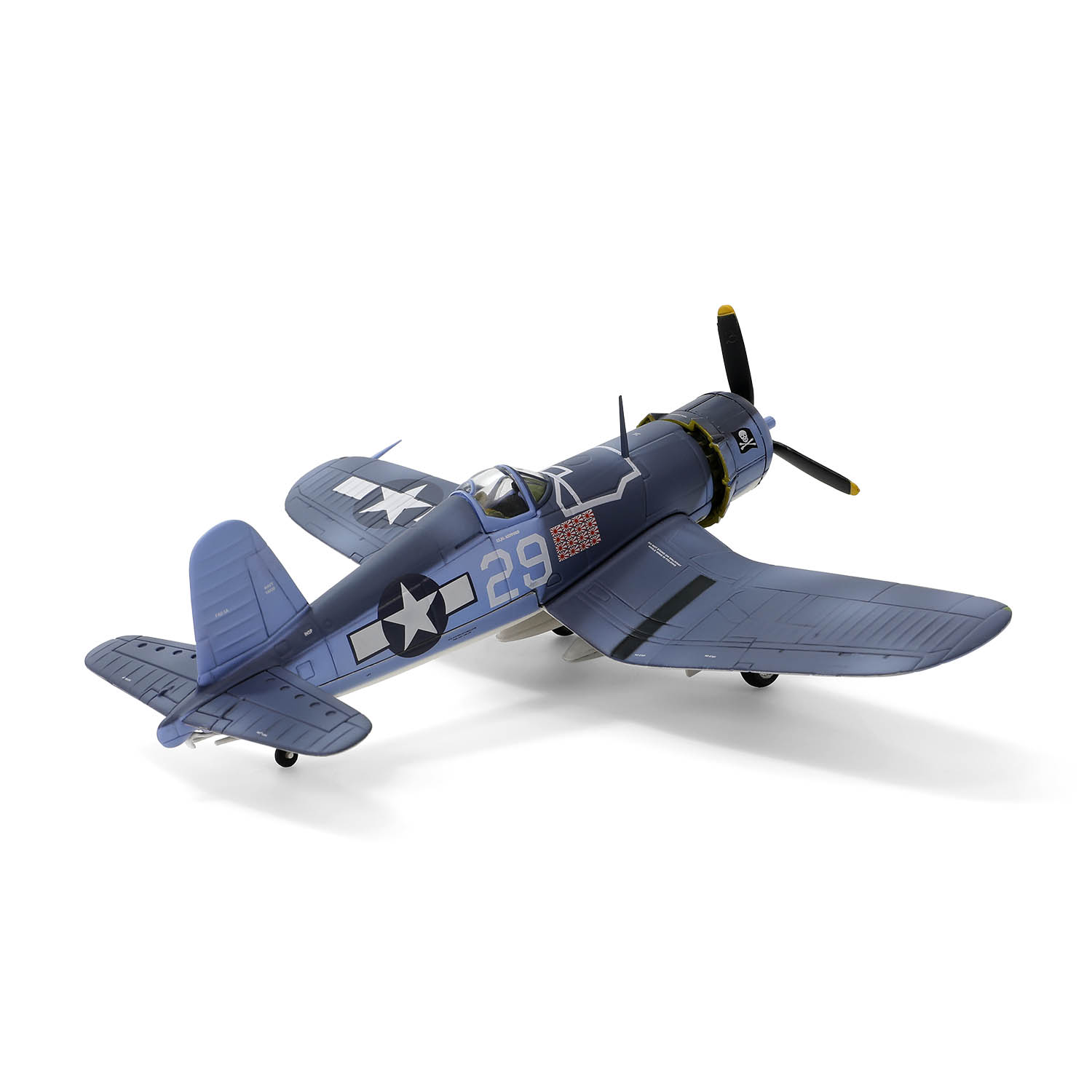
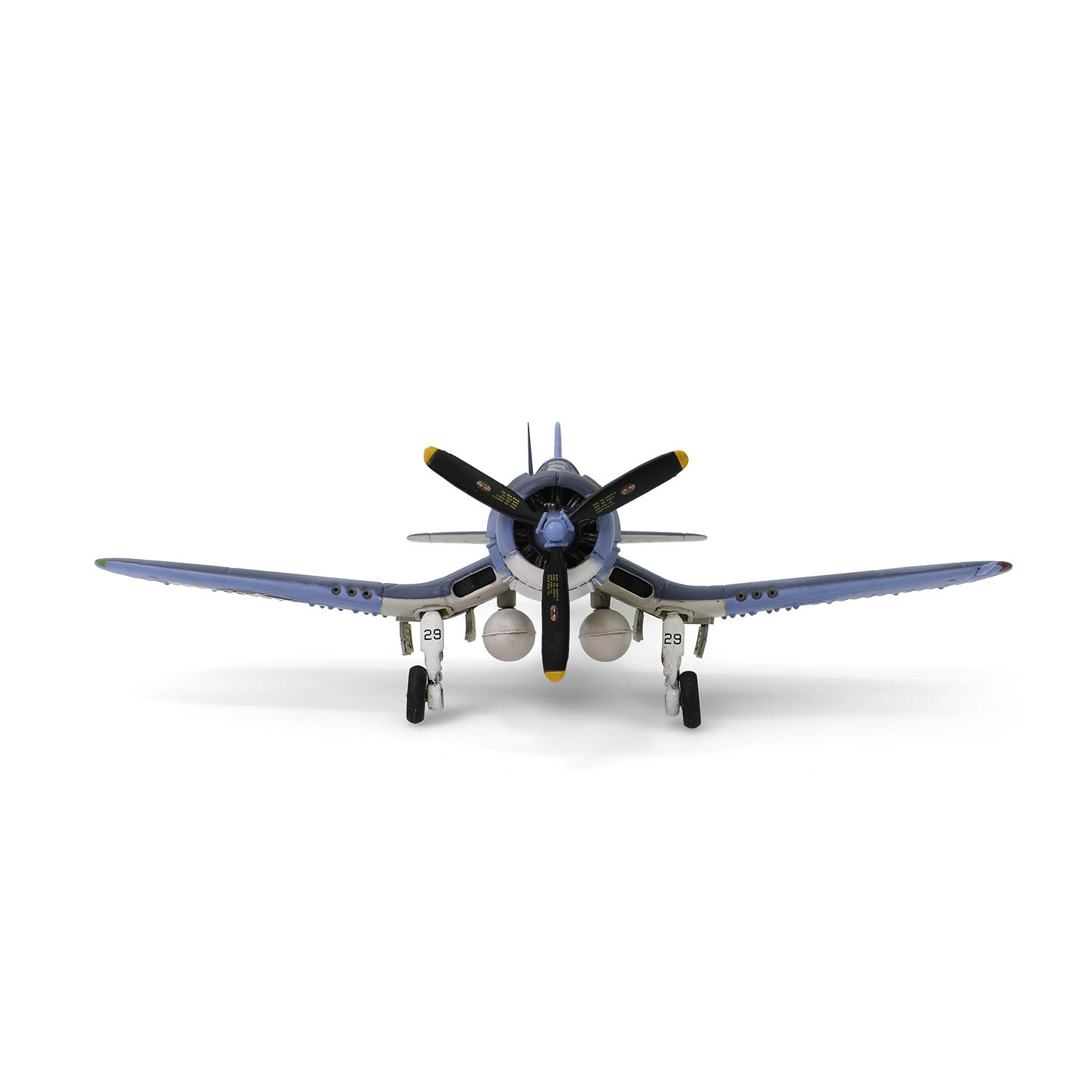
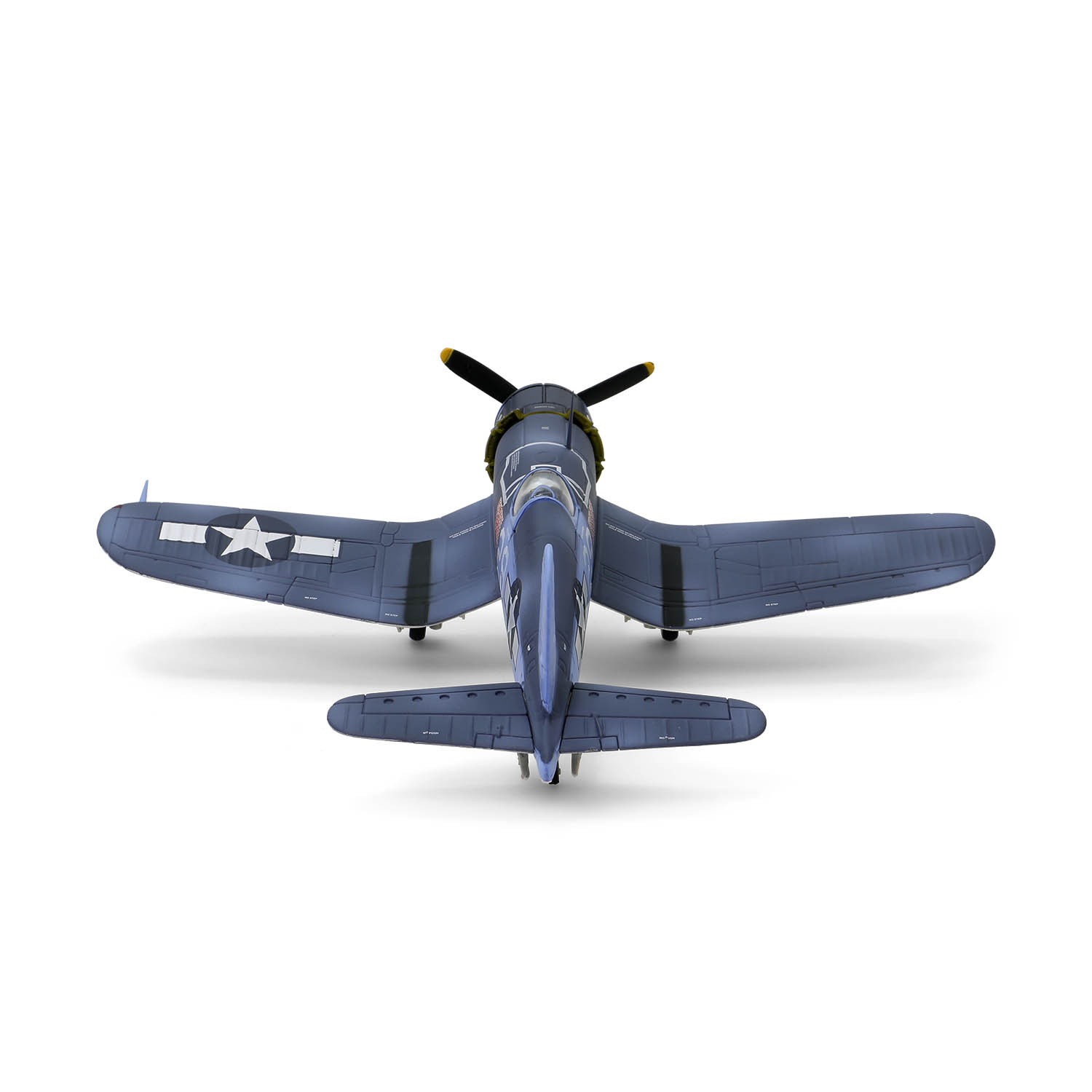
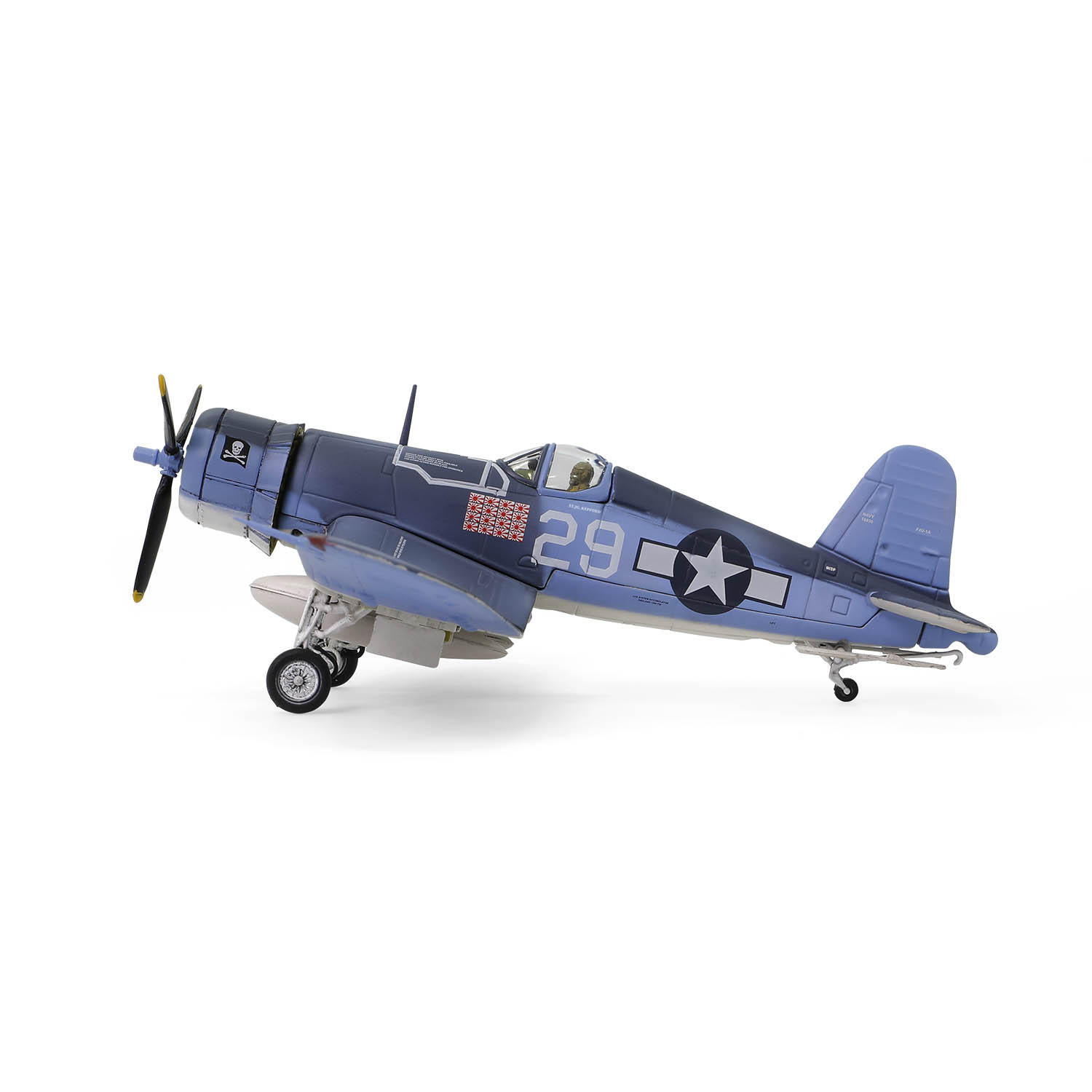
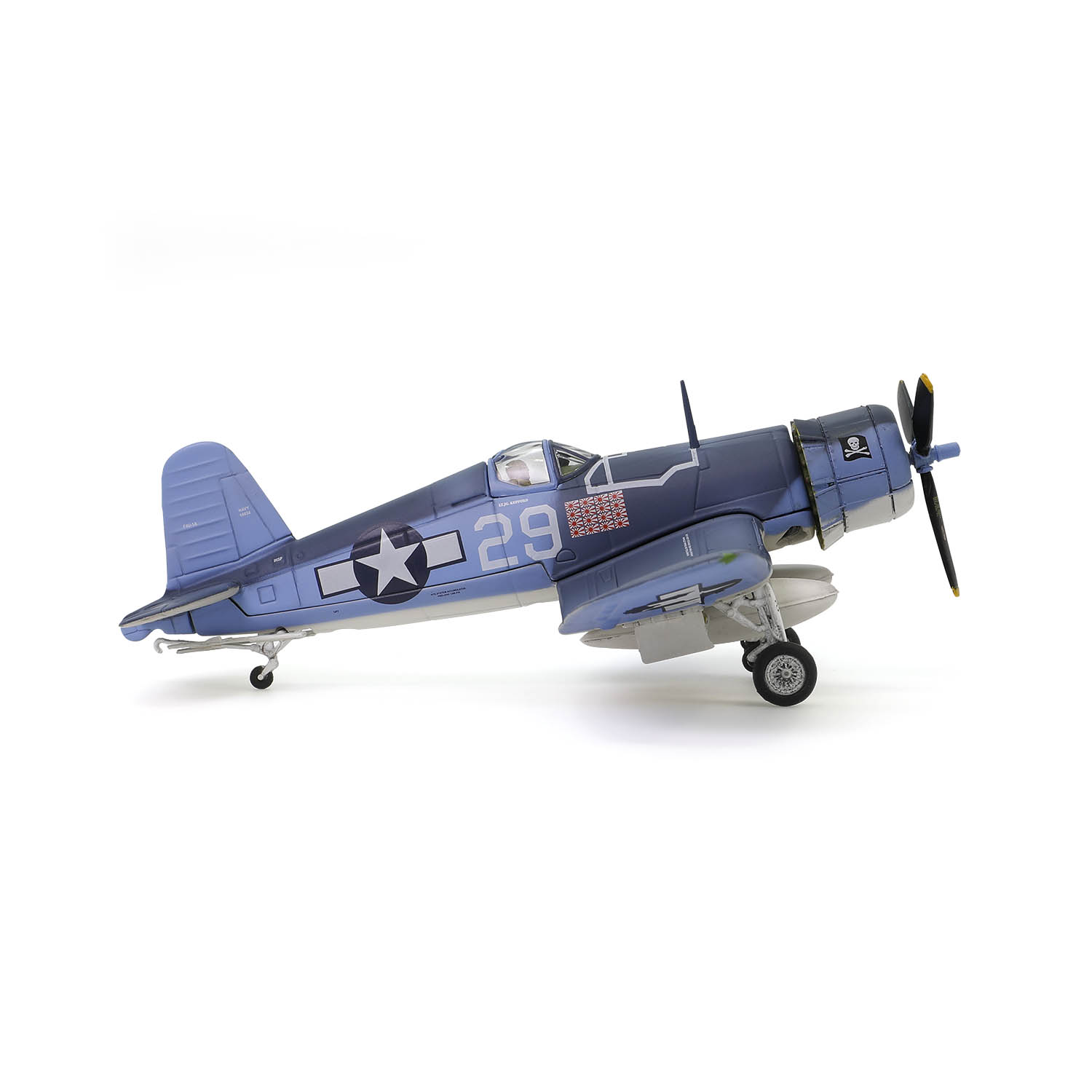
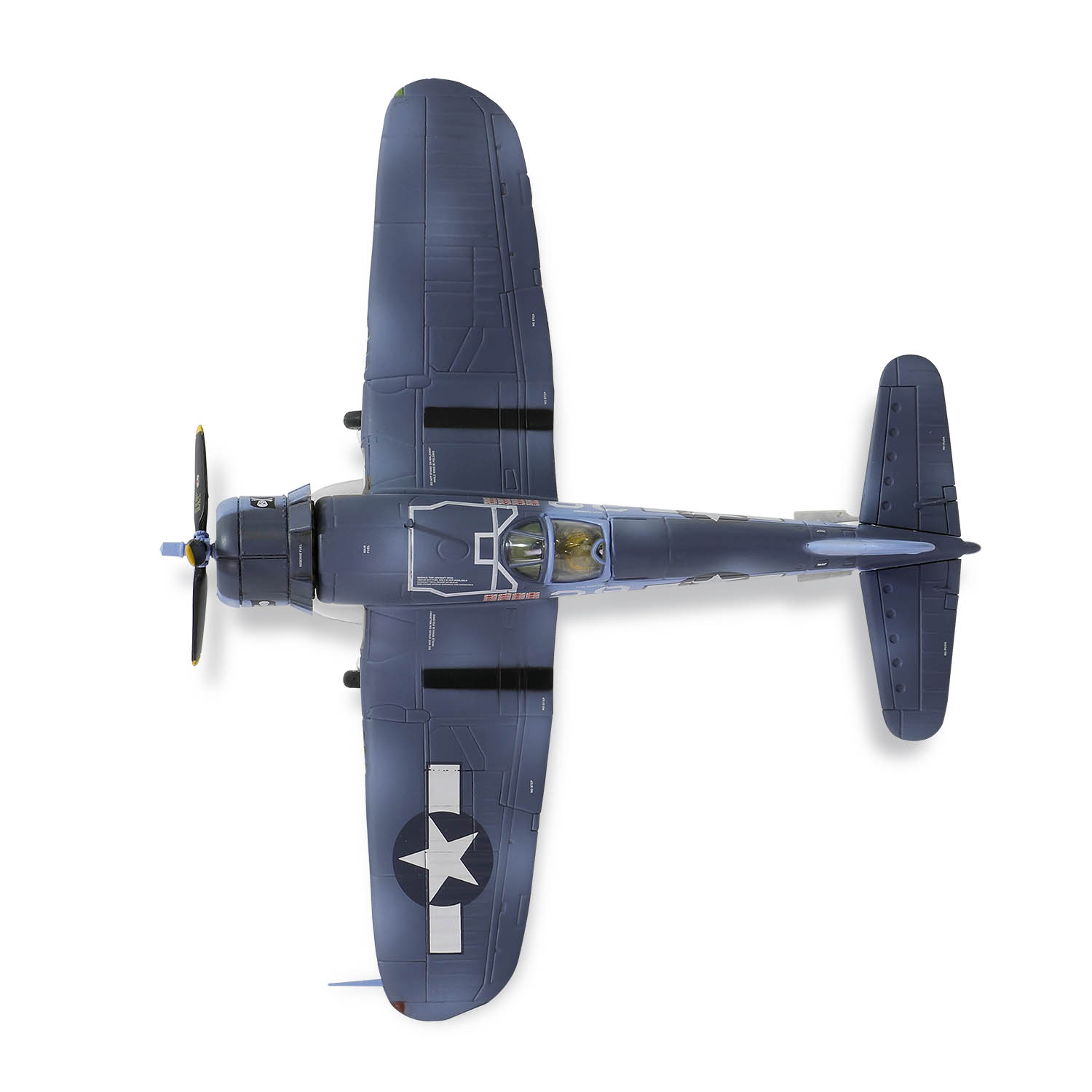
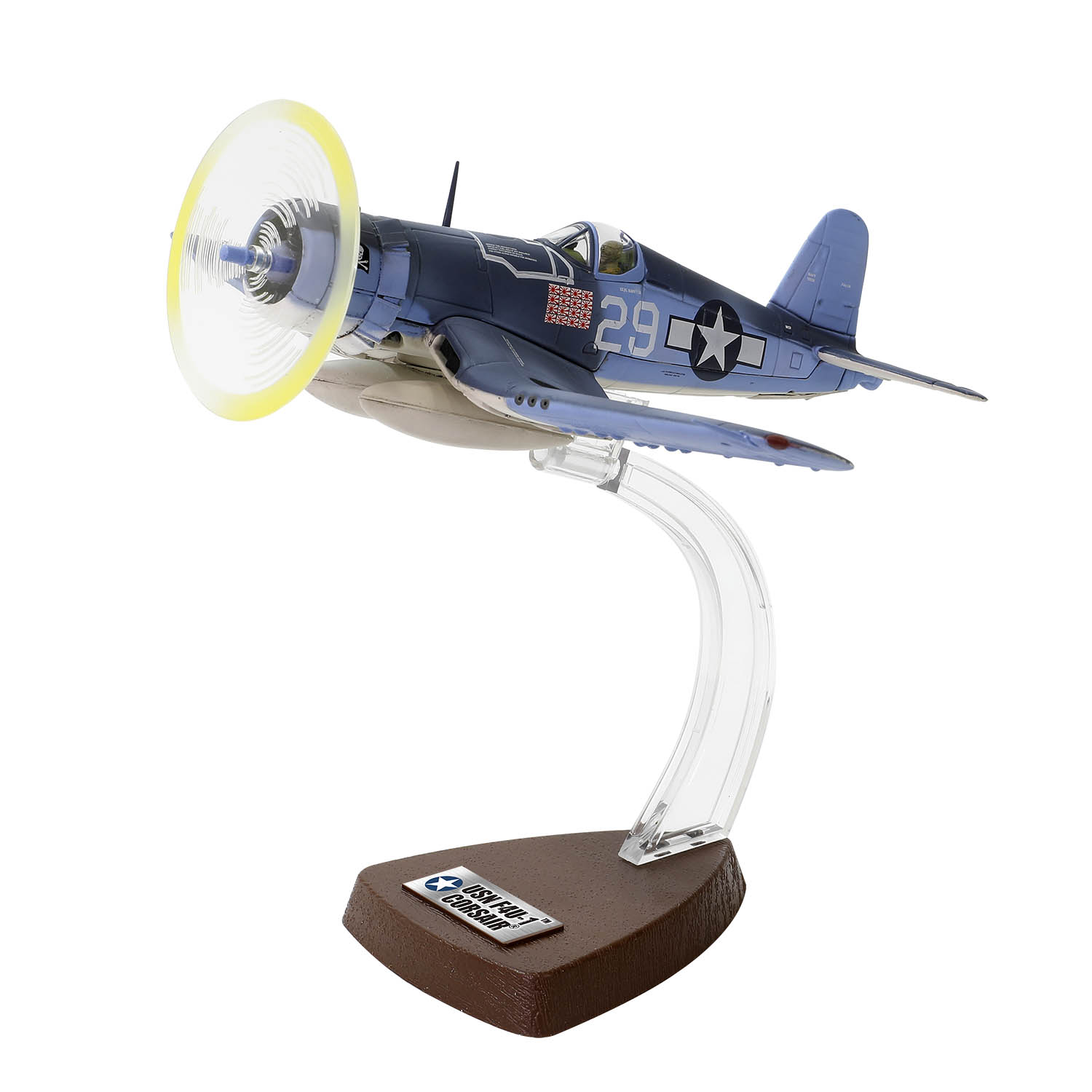
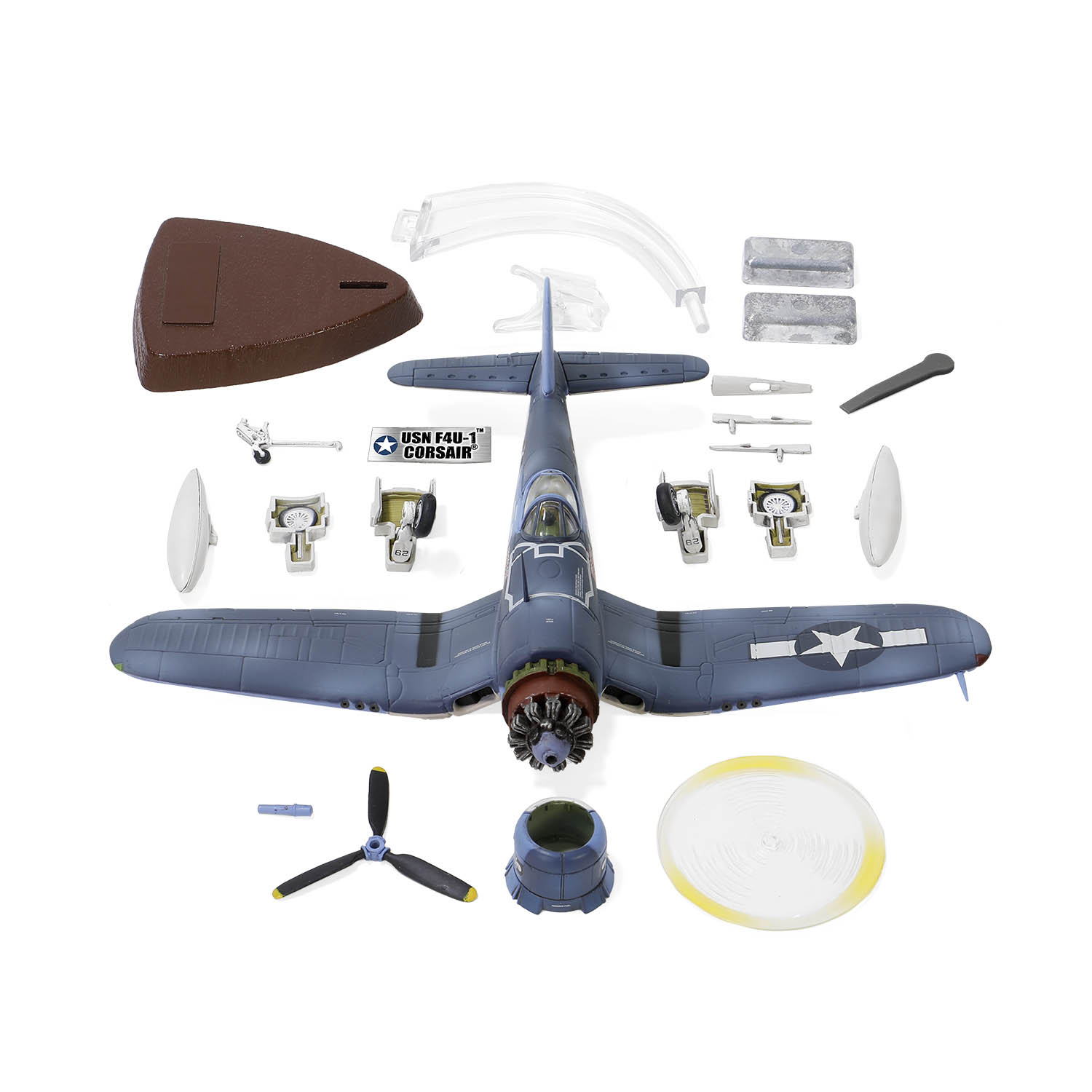
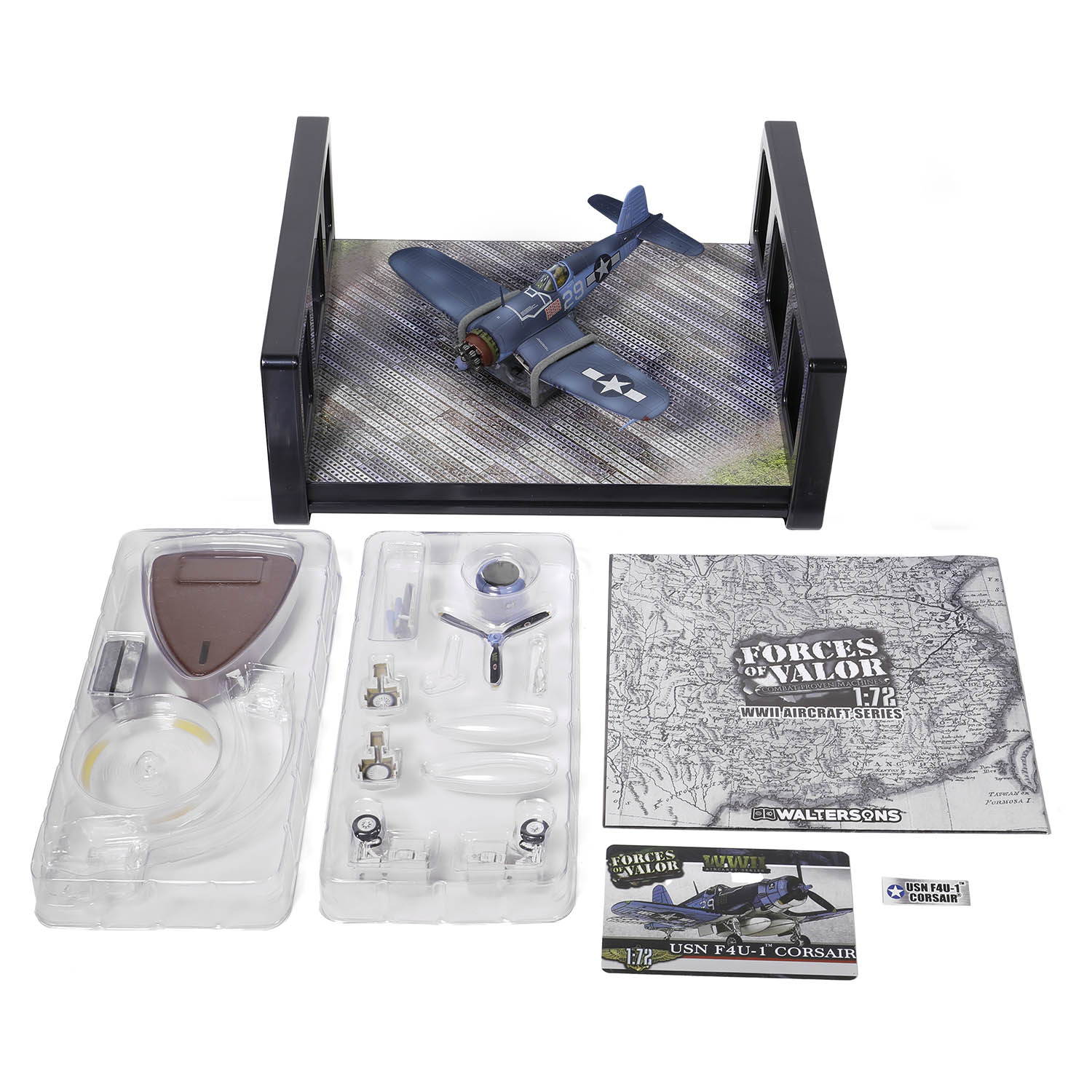
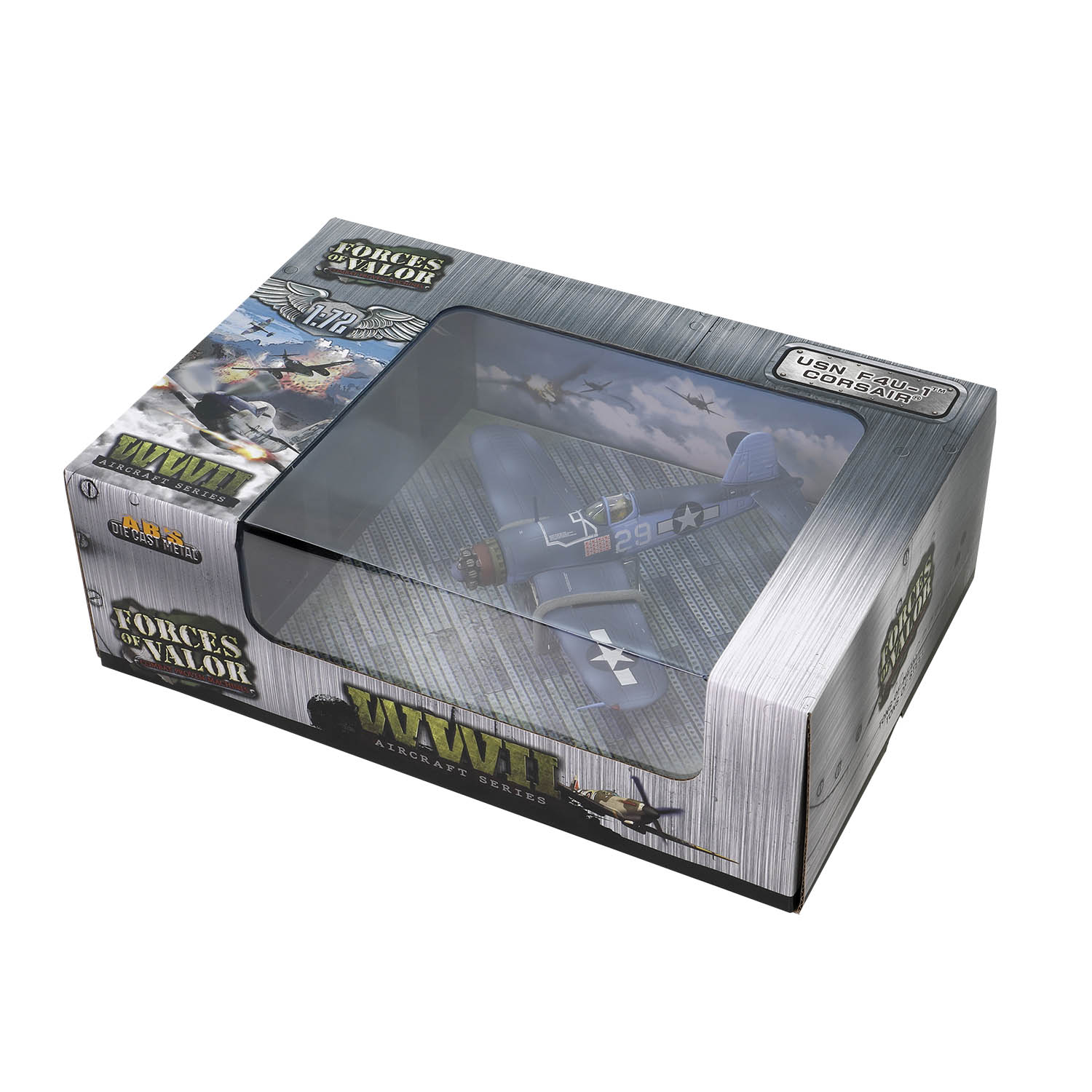
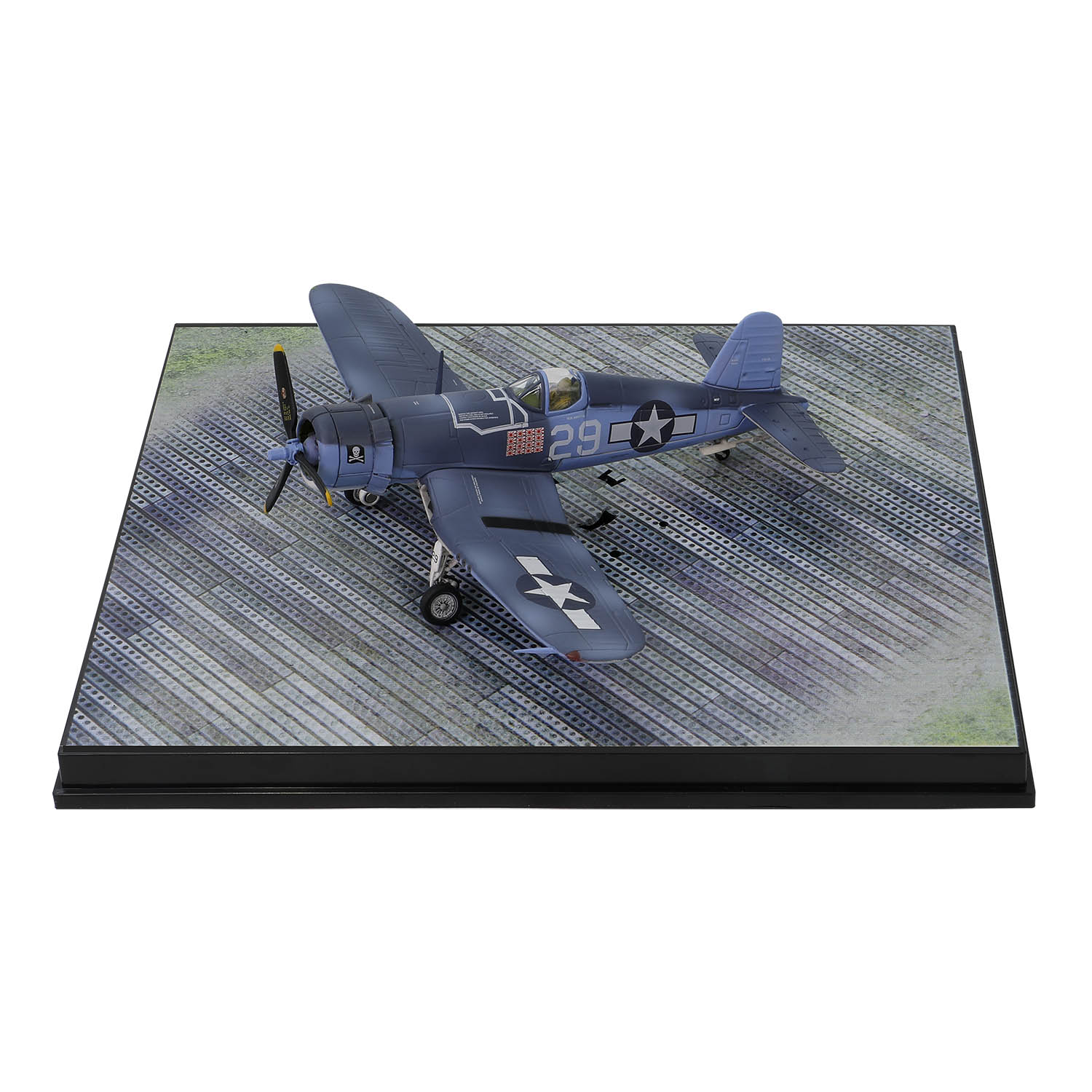
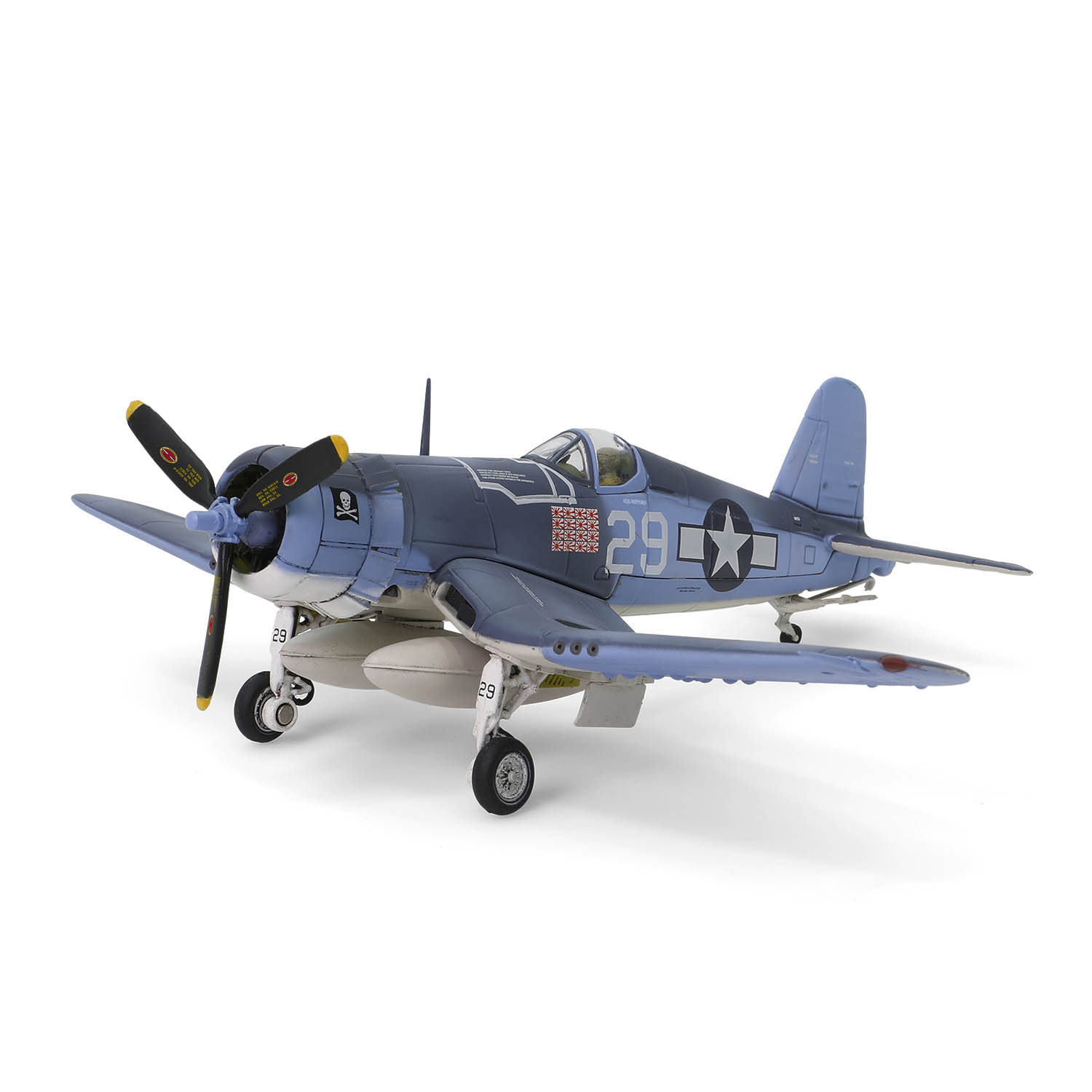
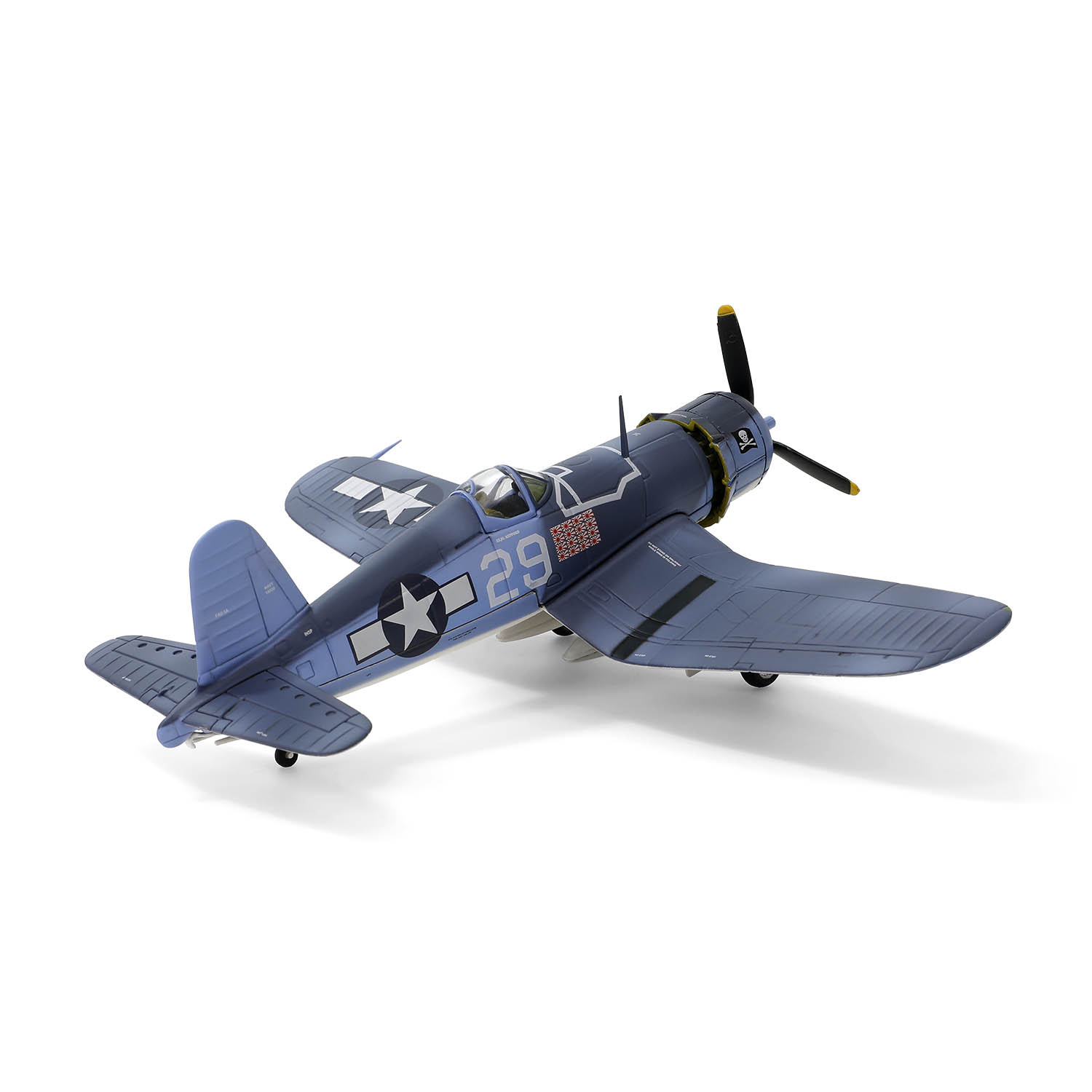
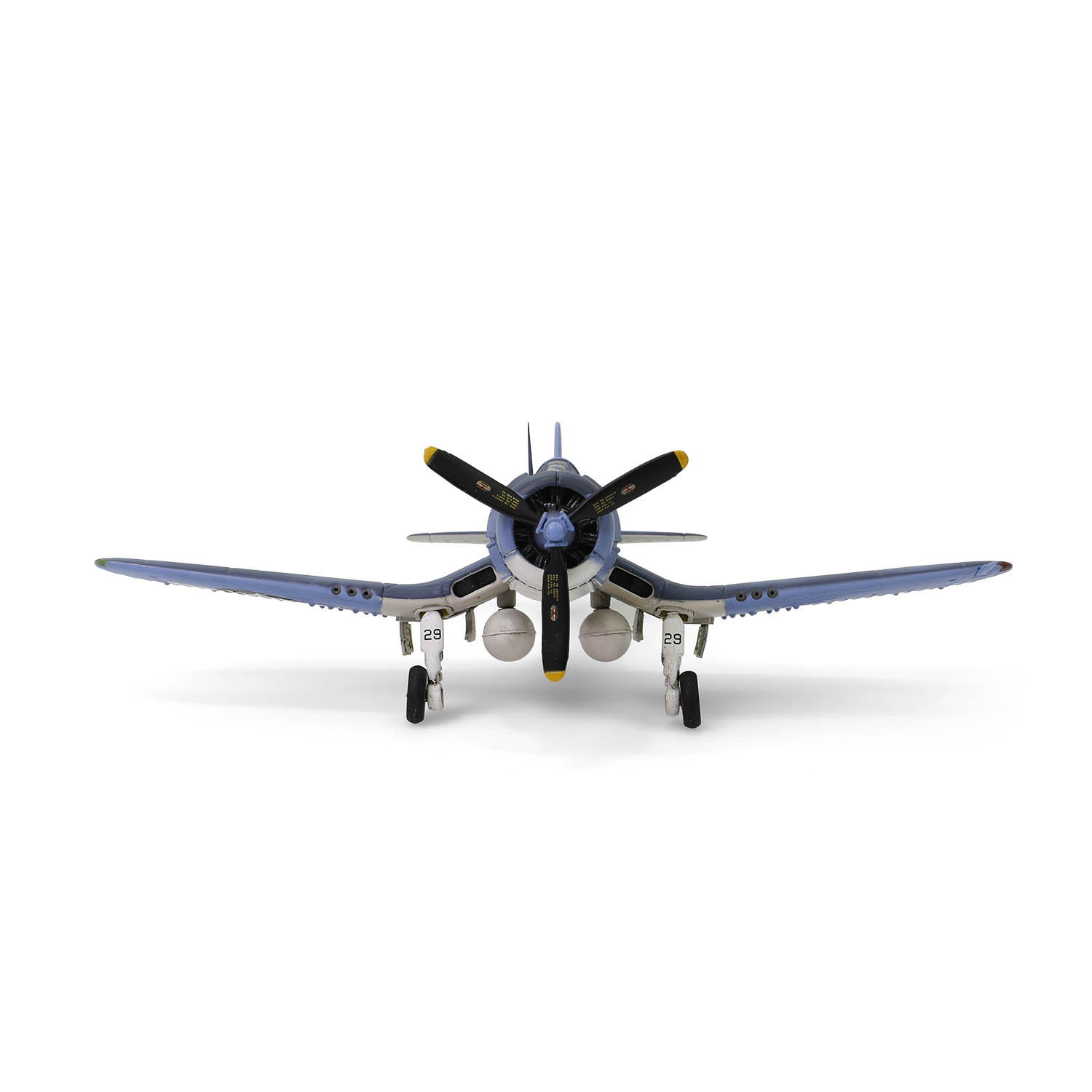
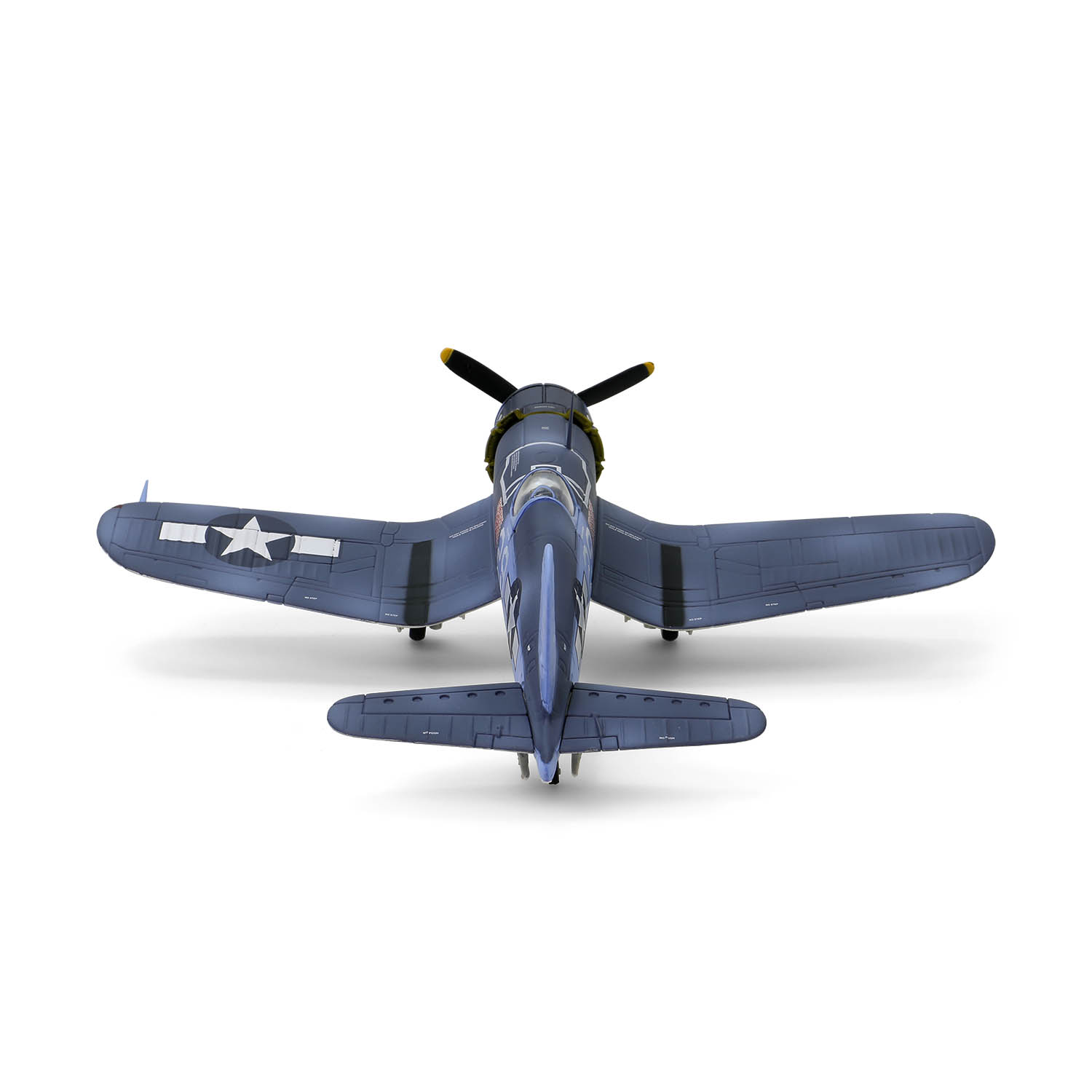
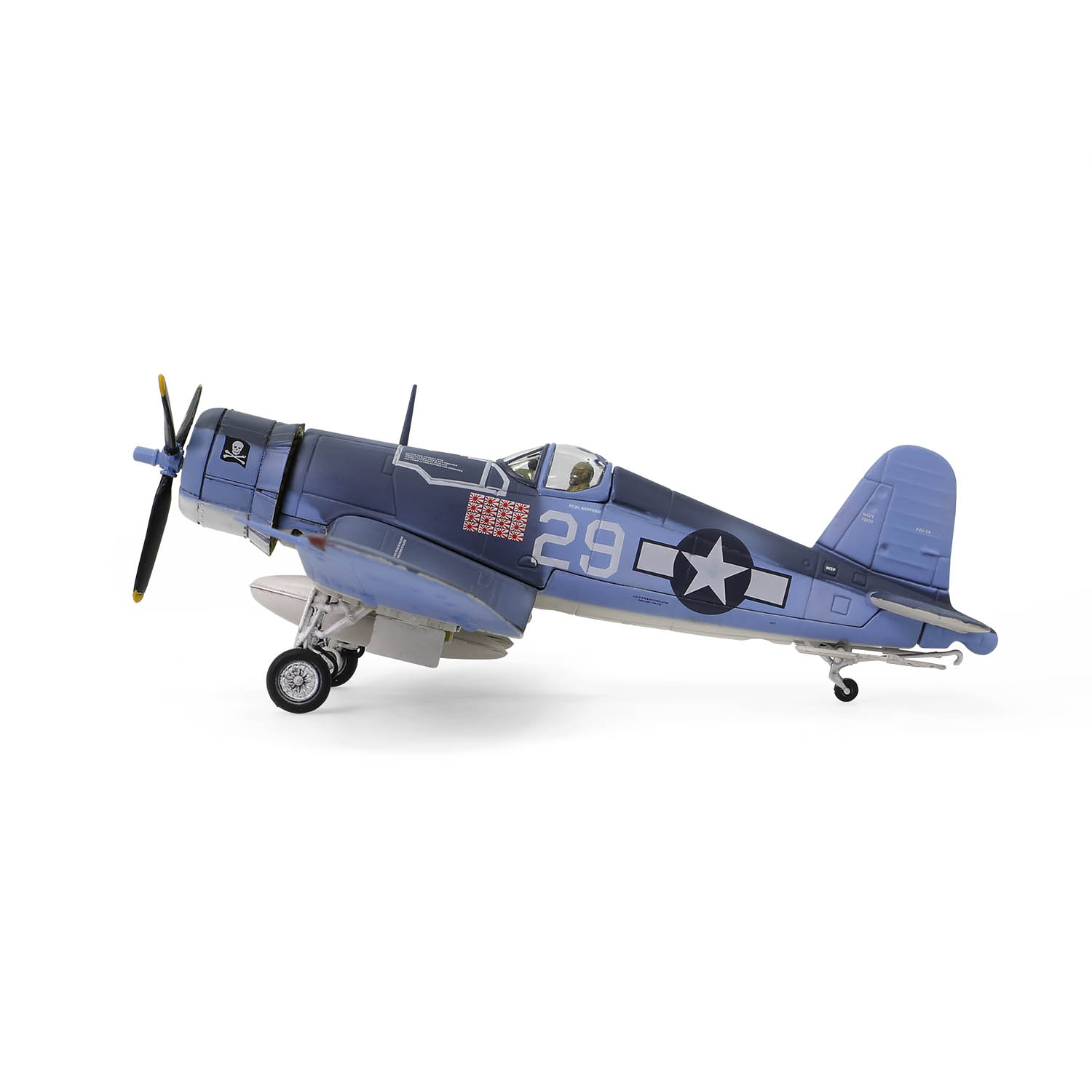
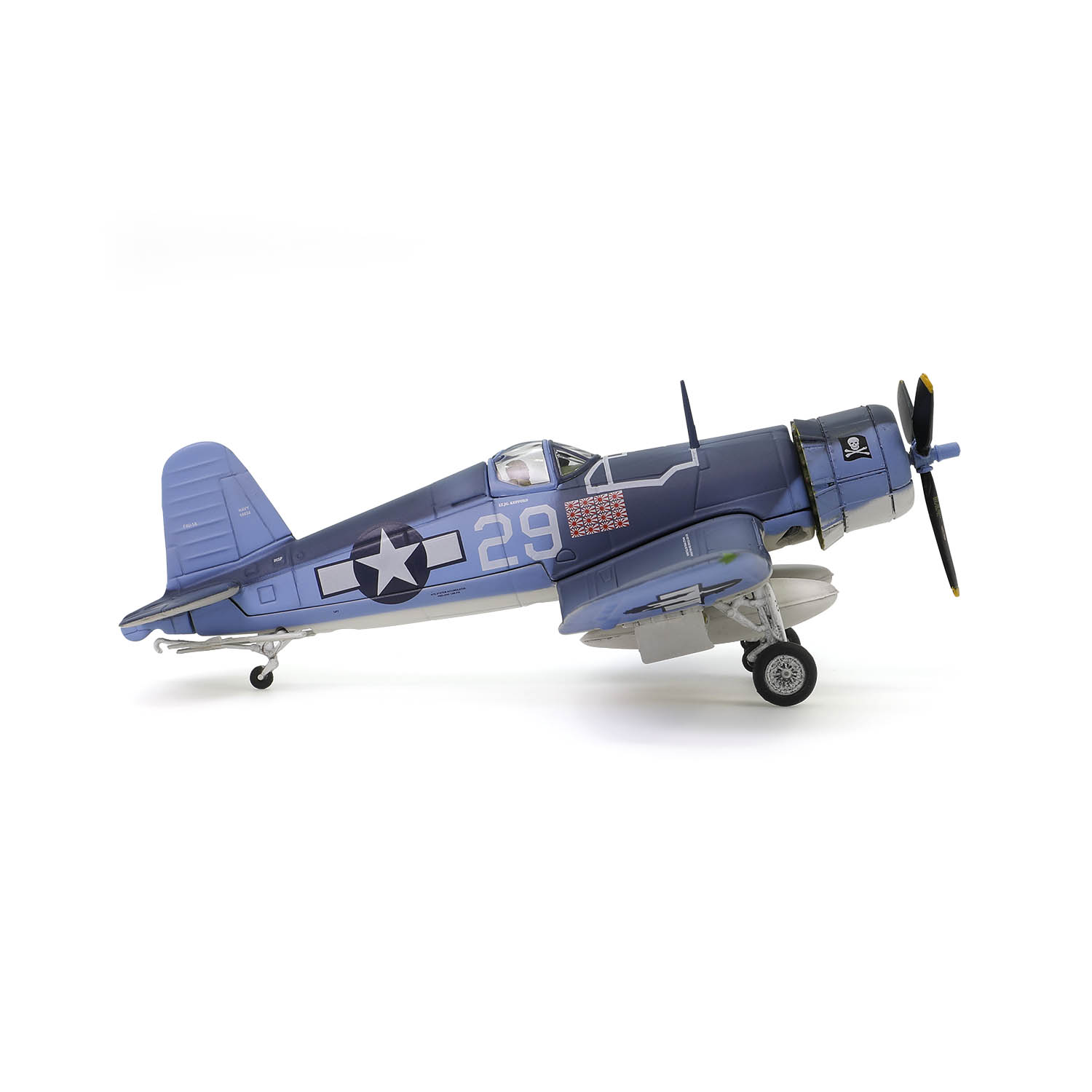
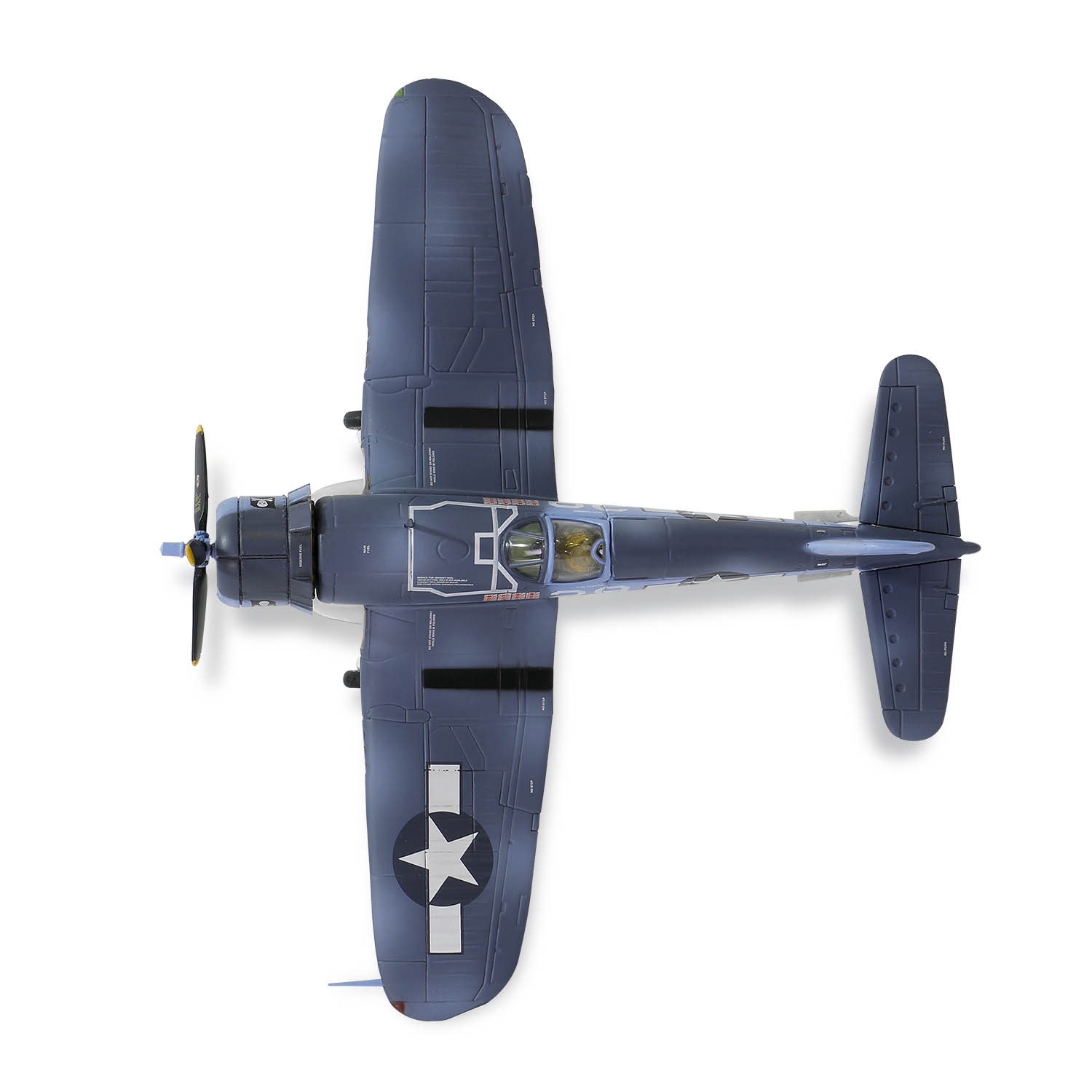
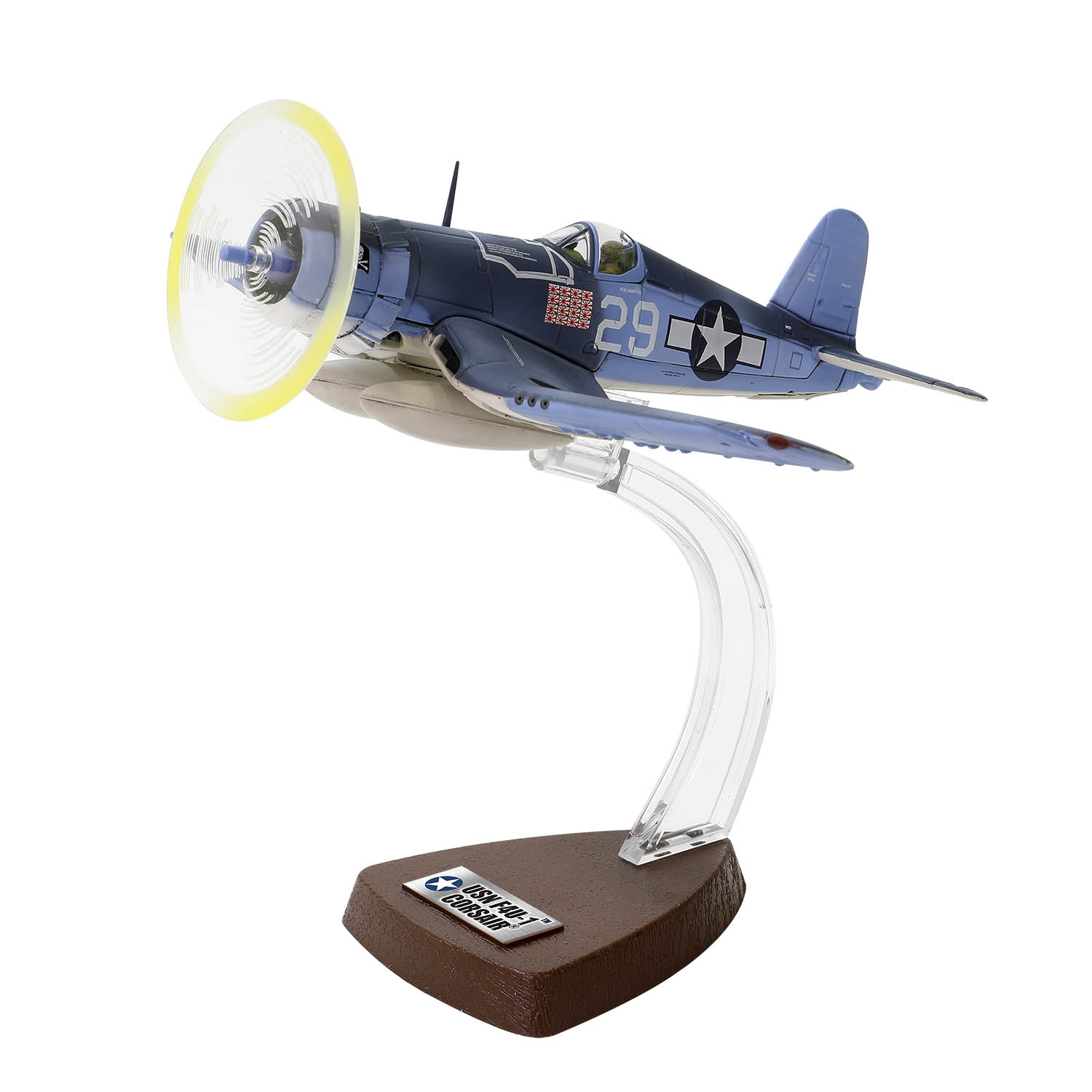
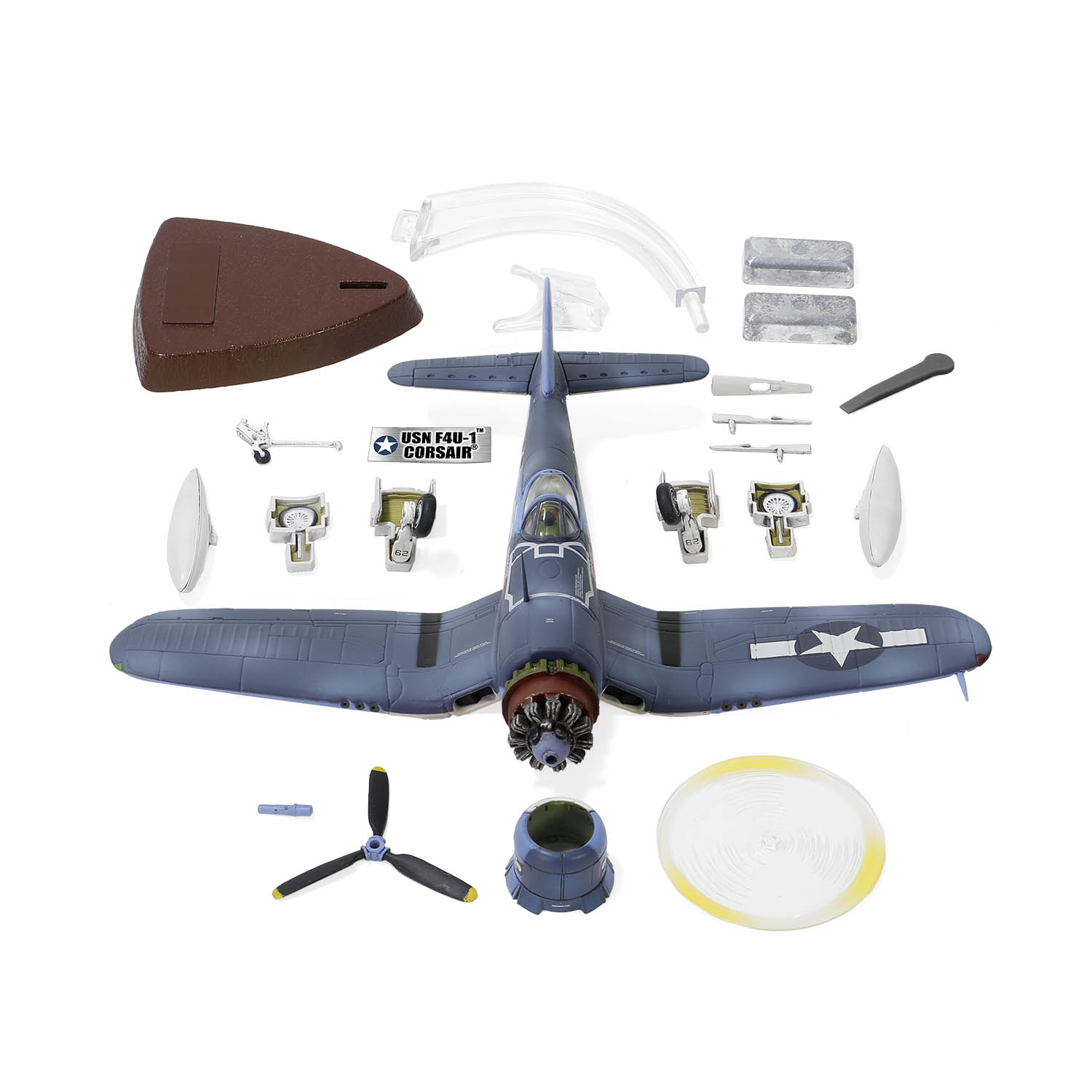
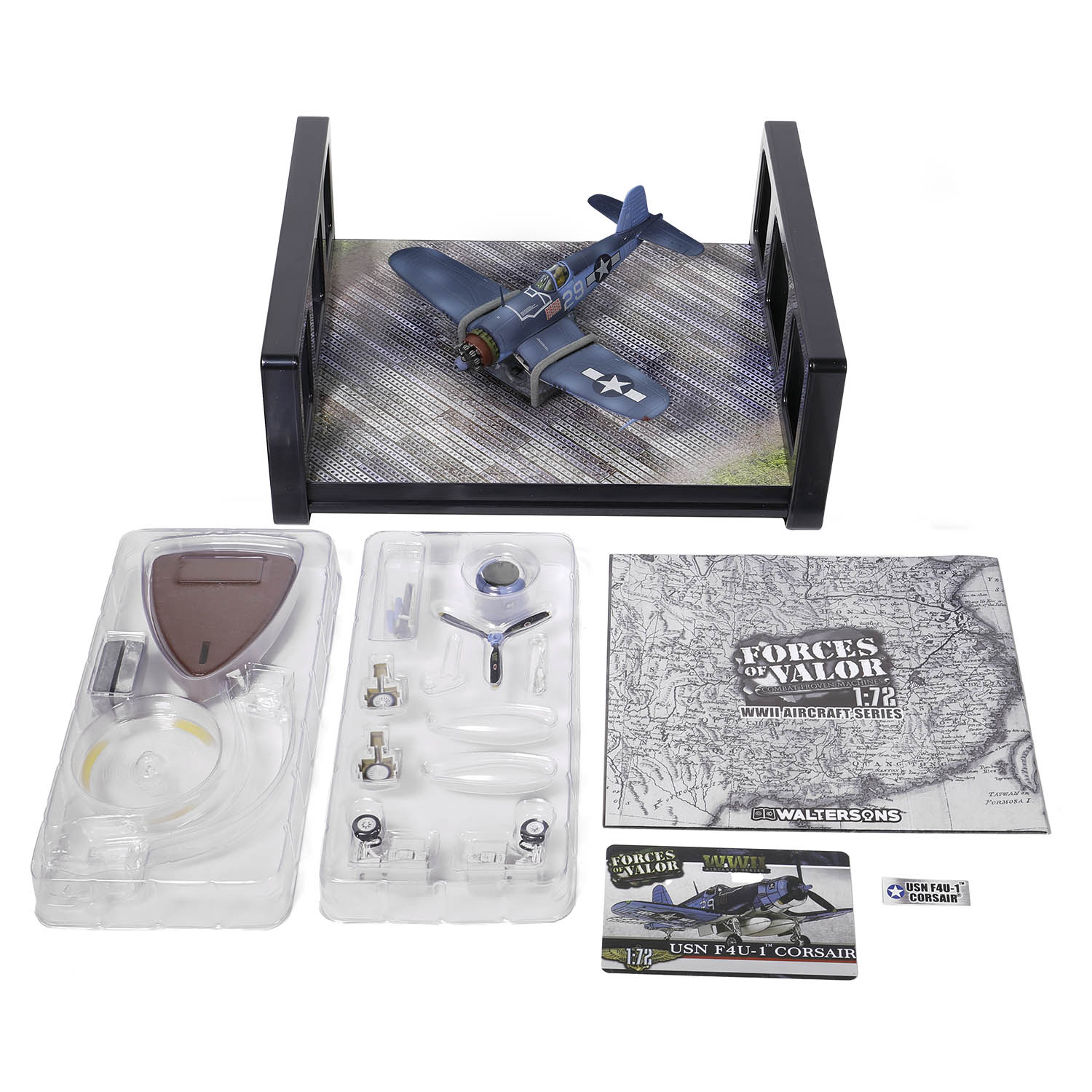
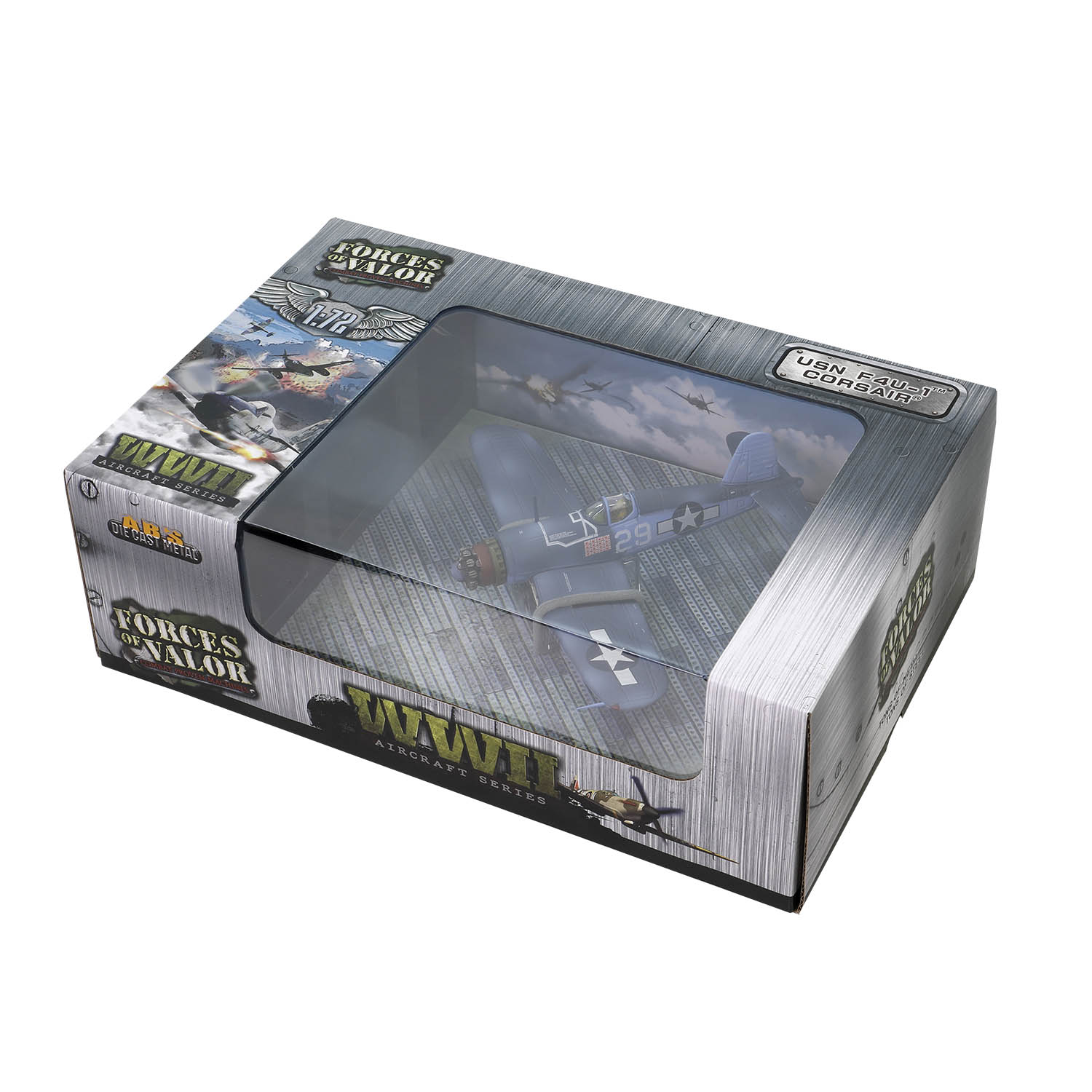
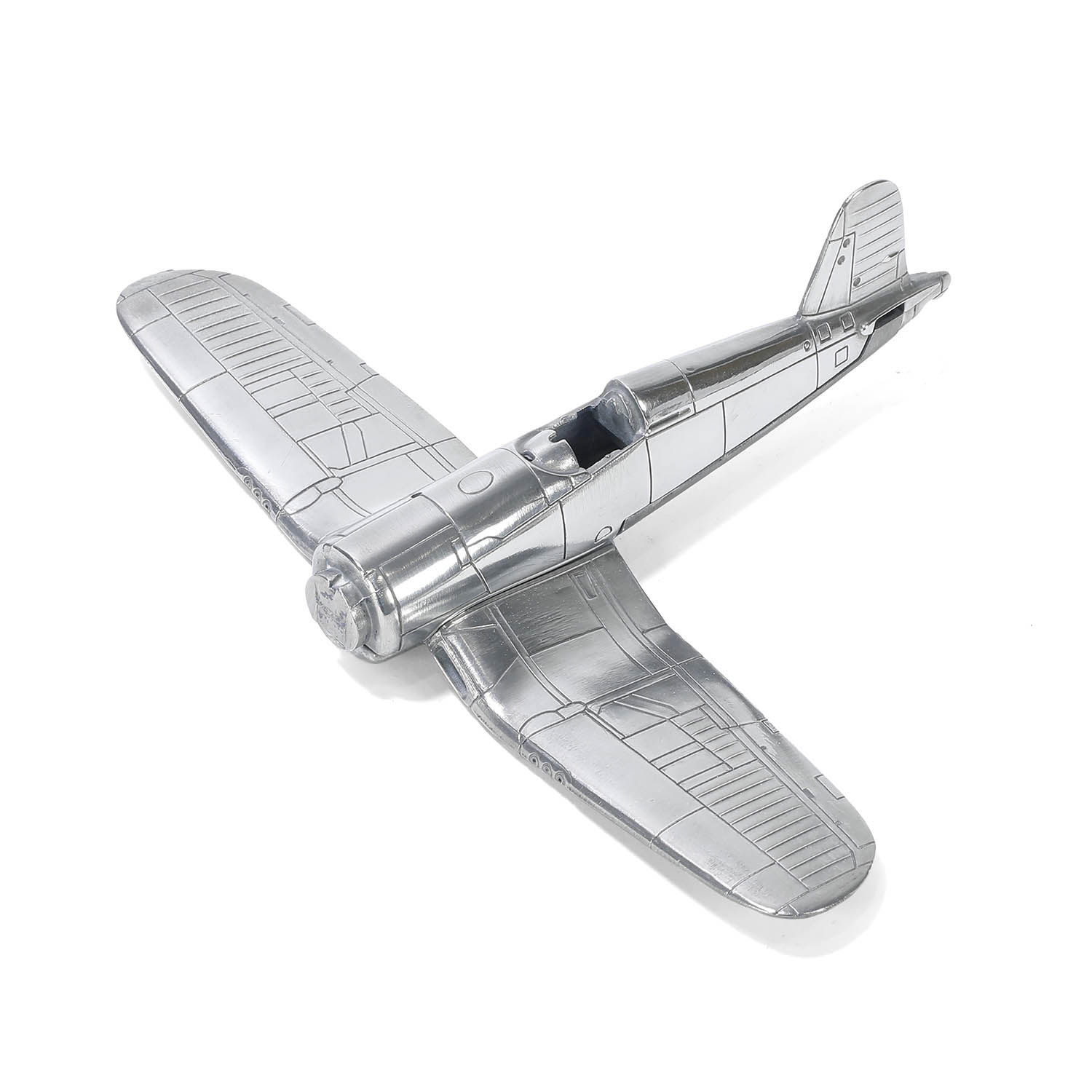
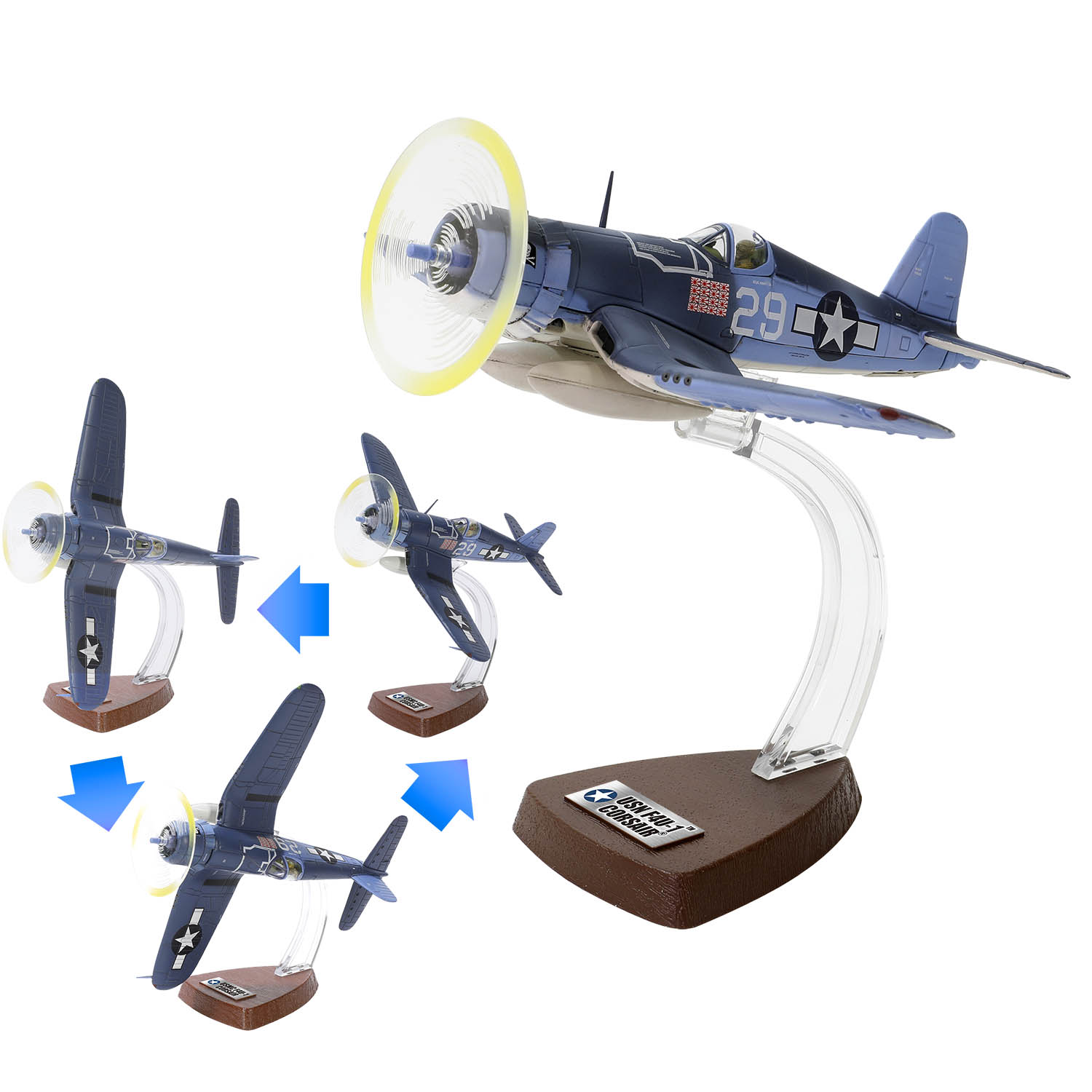
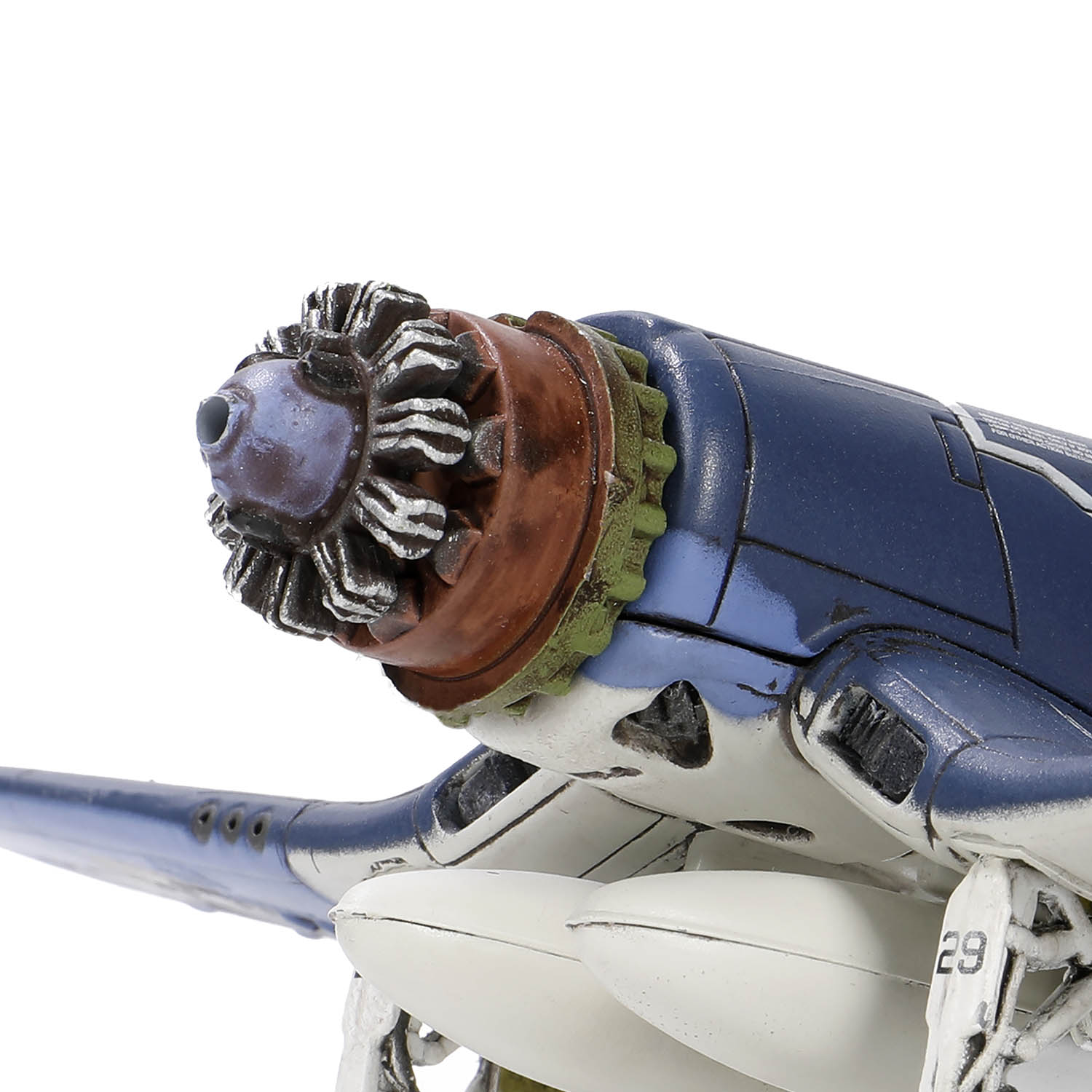
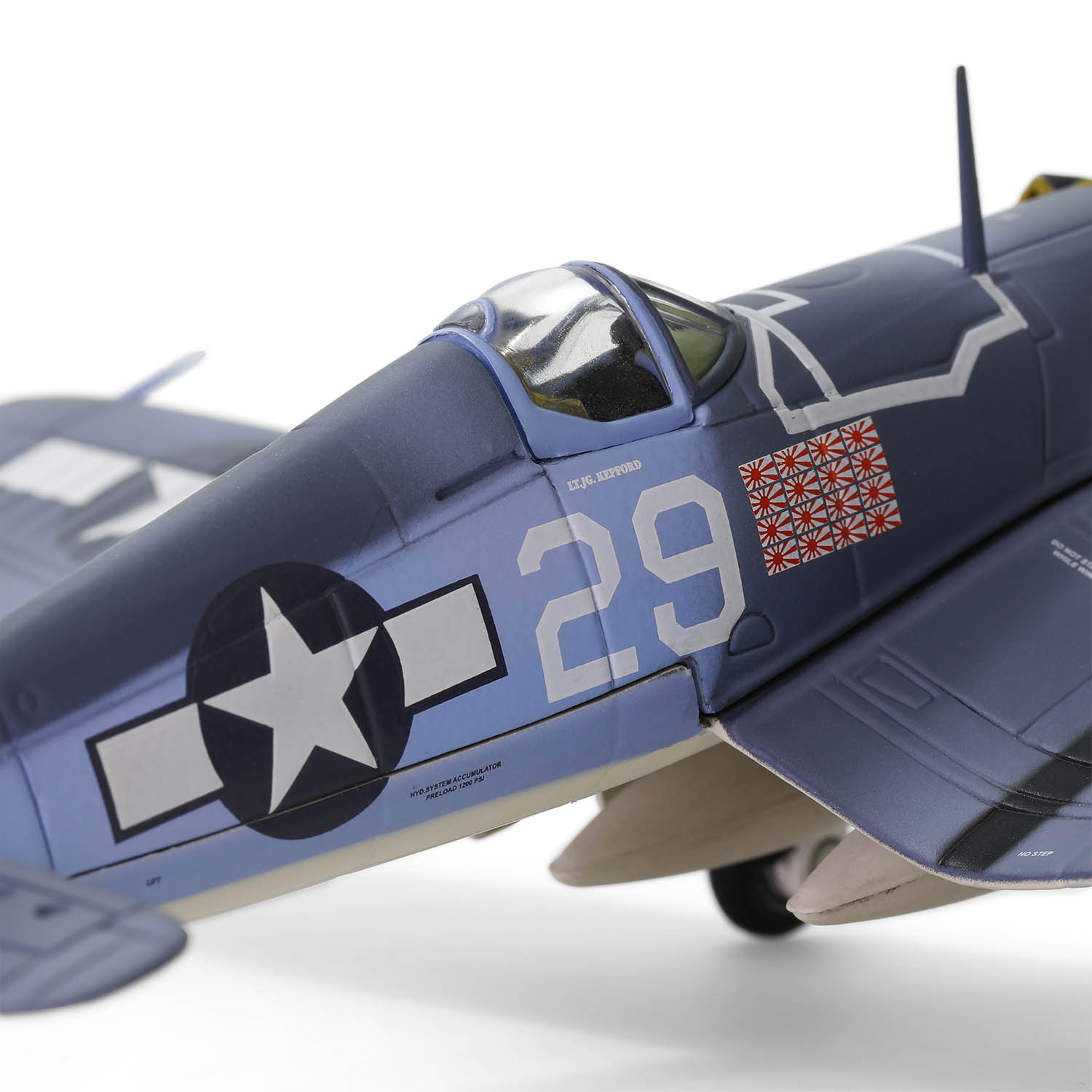
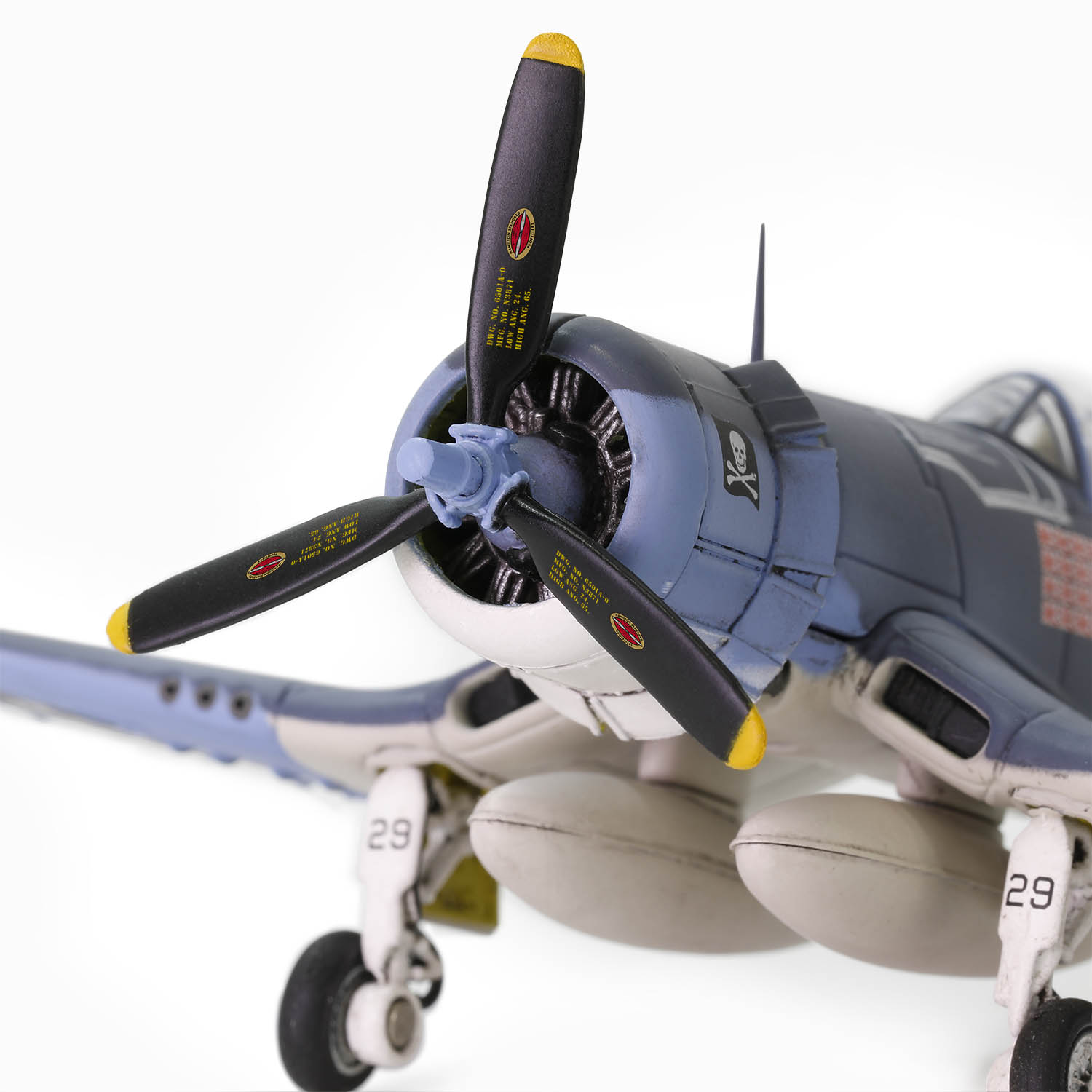
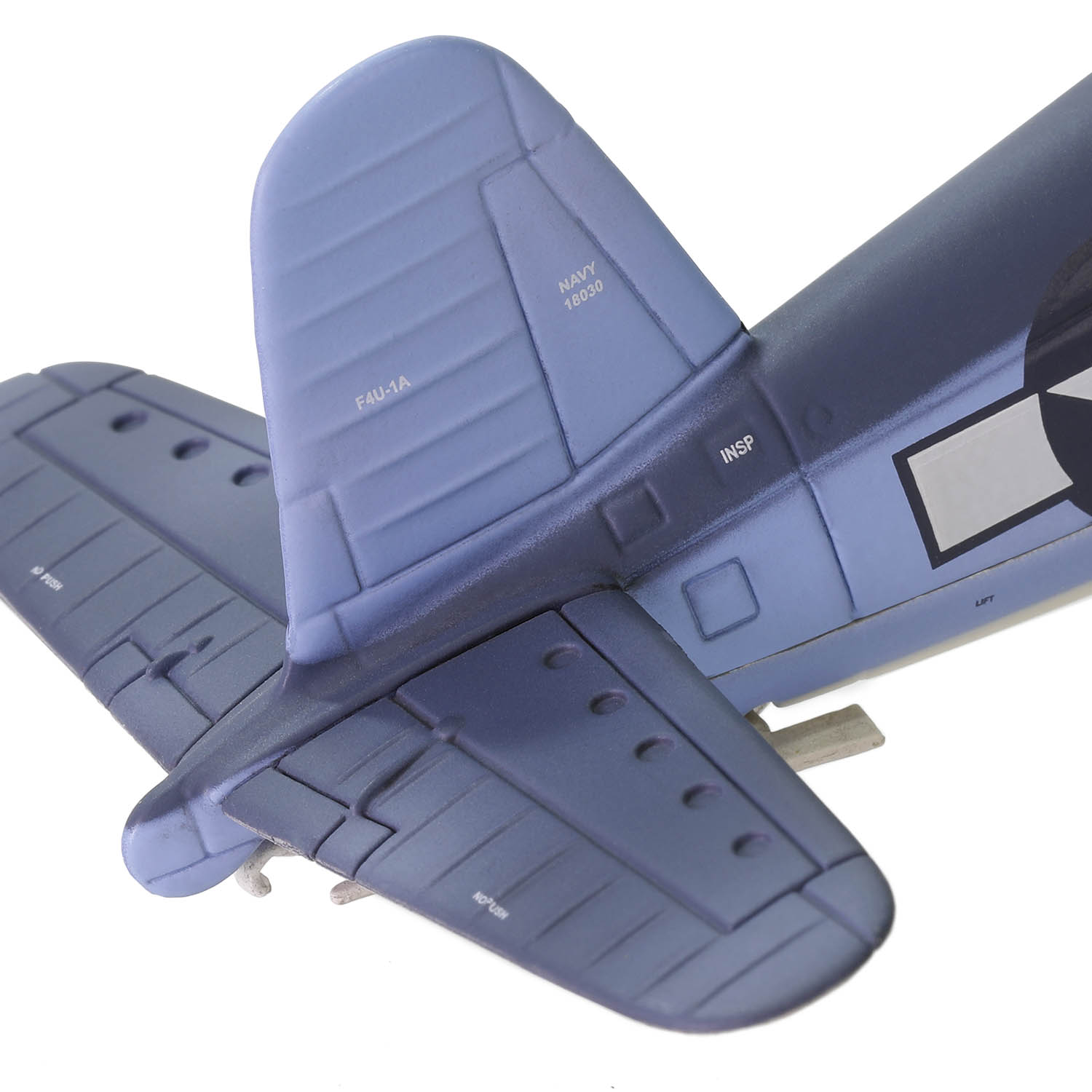
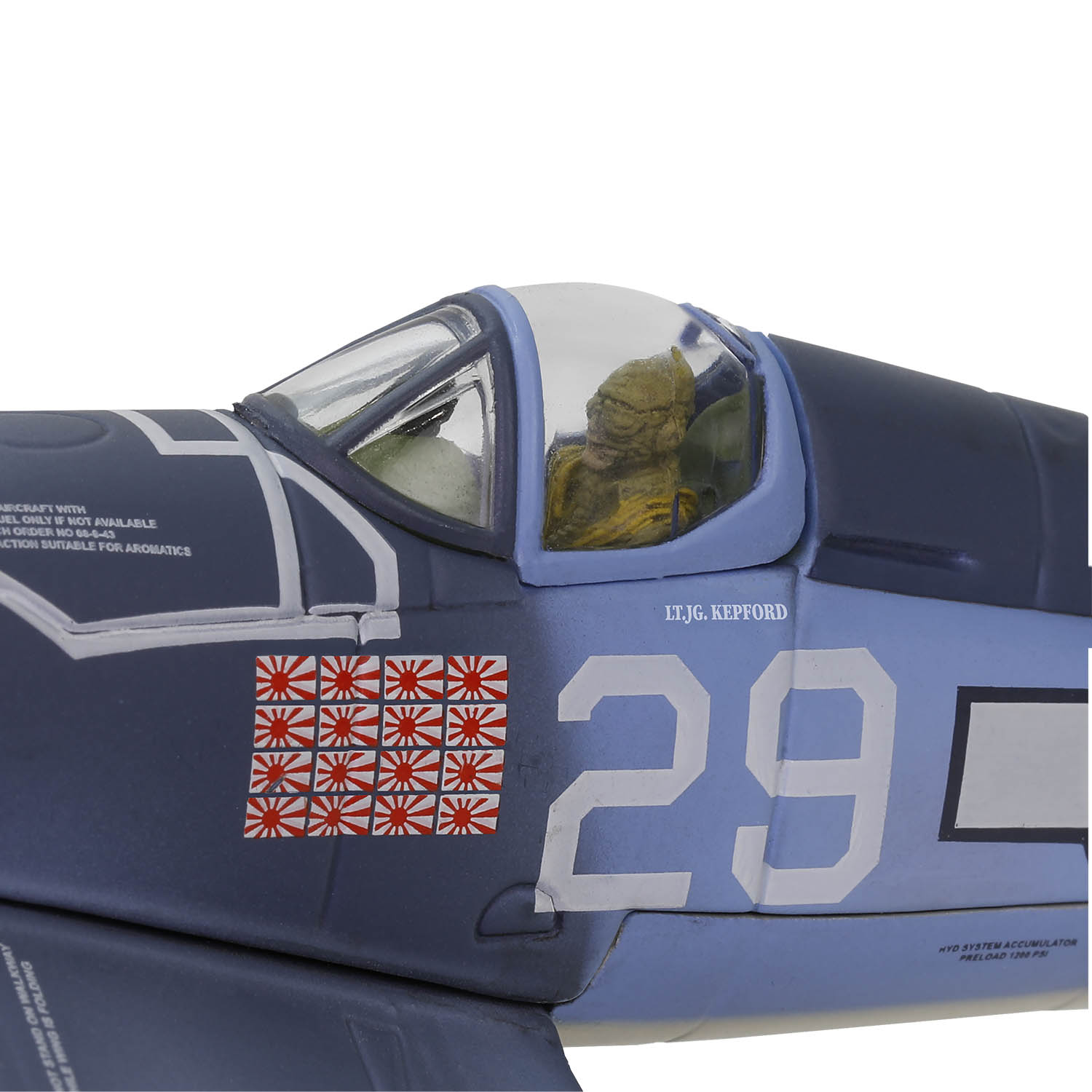
The Vought F4U-1 Corsair is a highly regarded fighter aircraft from World War II, renowned for its exceptional performance and formidable firepower. It features excellent maneuverability and stability, with a streamlined design and a high aspect ratio wing that enhance its handling capabilities, typically armed with four .50 caliber machine guns. Powered by the R-2800 Double Wasp engine, it delivers up to 2000 horsepower, providing ample power to ensure competitiveness in various flight conditions. With a top speed of approximately 640 kilometers per hour, it can swiftly engage or disengage from enemy aircraft during aerial combat. The outstanding performance of this fighter effectively suppressed the Imperial Japanese Navy Air Service, enhancing the U.S. military's air superiority in the Pacific theater and altering the dynamics of warfare.
Its gull-wing shape makes it instantly recognizable. The distinctive sound it produces during dive attacks led the Japanese to nickname it the 'Whistling Death.' Combined with its speed, agility, and resilience, it was initially deemed too powerful to launch from aircraft carriers. The Corsair repeatedly carved a path of destruction in battles during World War II, completely surpassing the formidable Zero fighter.
Lieutenant (JG)Ira C. Kepford, flying under the code name 'White 29,' was part of VF-17 'Jolly Rogers' and was deployed to Bougainville in the Solomon Islands in February 1944. During the Battle of the Solomon Sea, Kepford bravely advanced through intense anti-aircraft fire at Bunker Hill, shooting down four enemy aircraft and damaging a fifth, for which he was awarded the Navy Cross. On January 29, Kepford led his wingmen in an attack against 12 Japanese fighters, achieving four kills. Over the course of his career, he shot down 16 aircrafts, making him the top ace of VF-17.